



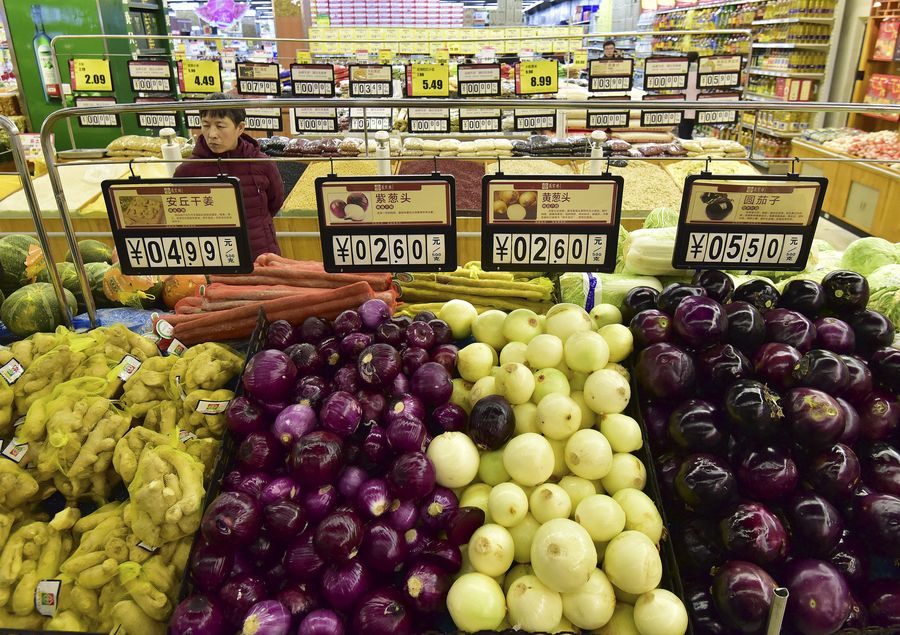
A citizen selects goods at a supermarket in Shexian County of Handan, north China's Hebei Province, March 9, 2019. (Xinhua/Hao Qunying)
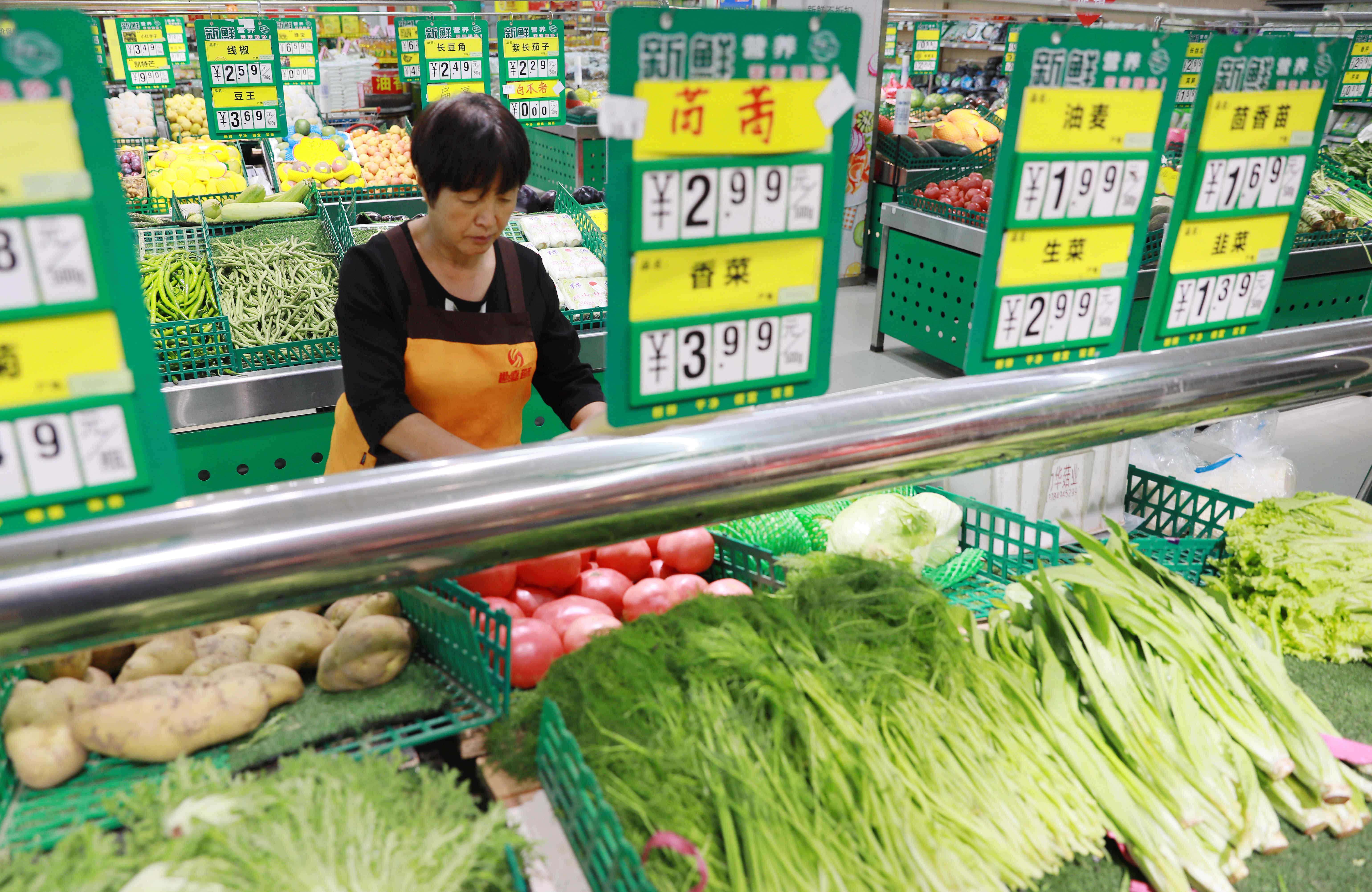
A staff member places vegetables at a supermarket in Xingtai, north China's Hebei Province, Oct. 15, 2019. (Xinhua/Song Jie)
"The CPI uptick we're experiencing now indicates short-term structural inflation driven by pork prices that requires no monetary policy-level adjustments," said Zhang Jun, an analyst at Morgan Stanley Huaxin Securities.
BEIJING, Oct. 15 (Xinhua) -- China's consumer prices in September remained within the annual target of around 3 percent, with more stabilizing macroeconomic measures to take effect in the near future.
The country's consumer price index (CPI), a main gauge of inflation, rose 3 percent year on year in September, up from 2.8 percent in August and representing the highest growth this year, the National Bureau of Statistics said Tuesday.
The average growth rate in the first nine months of this year came in at 2.5 percent, well within the around 3-percent range set by the government.
Food prices grew 11.2 percent year on year last month, up from 10 percent in August while non-food prices gained 1 percent, 0.1 percentage points lower than that of August.
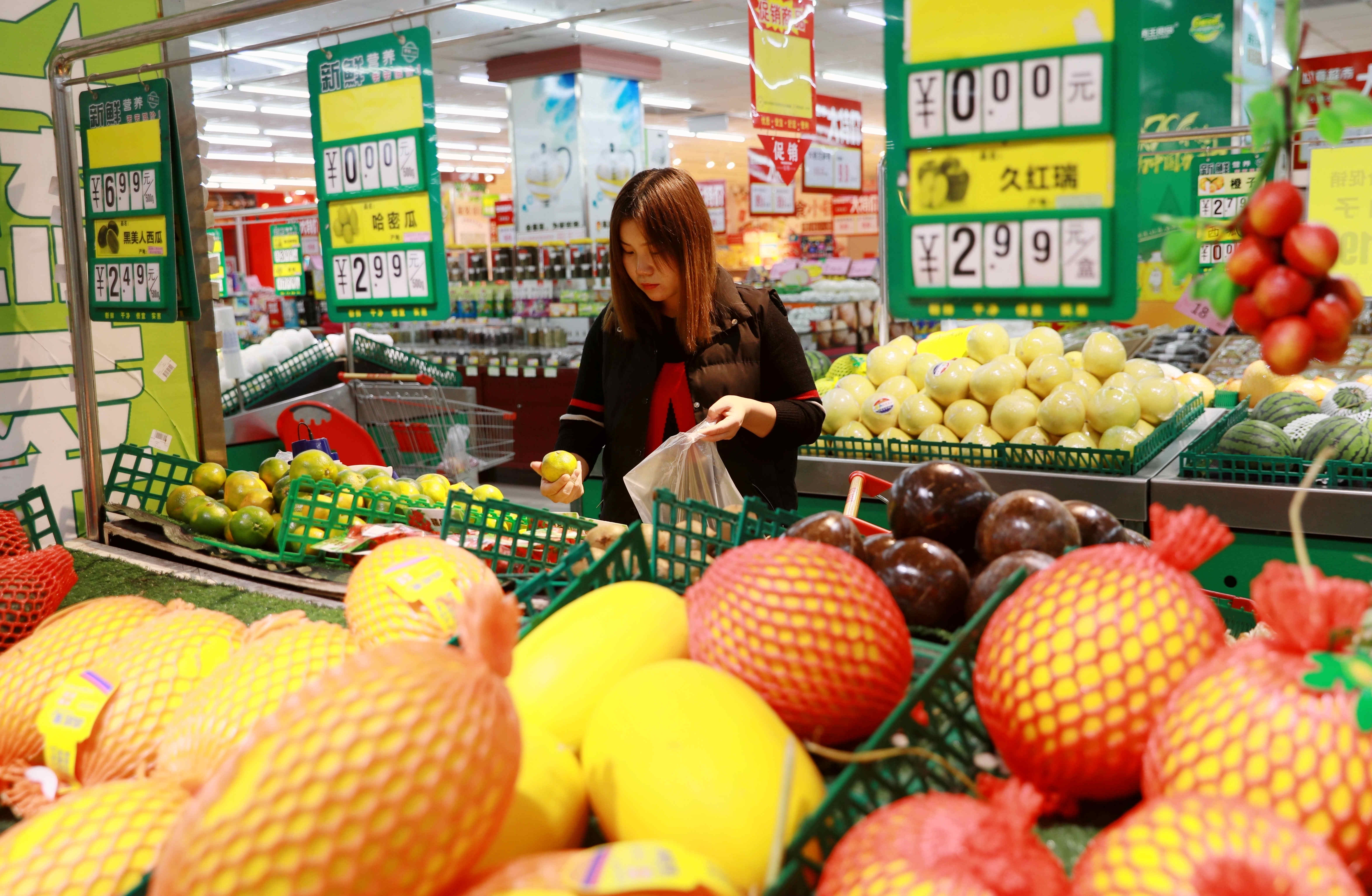
A customer selects fruits at a market in Xingtai, north China's Hebei, Oct. 15, 2019. (Xinhua/Song Jie)
Due to a shortage of supply, prices of the staple meat pork were one of the main drivers of the CPI uptick, while the growth rate narrowed on a month-on-month basis to 19.7 percent in September, said NBS senior statistician Shen Yun.
Although pork may continue to drive up food prices and the CPI in the fourth quarter, stabilizing measures issued by the government will eventually render supply-demand balance in the market, according to Lian Ping, chief economist at the Bank of Communications.
China has repeatedly pledged to spur hog production and stabilize pork supply. A total of 30,000 tonnes of pork was released from the national stockpile last month after an outbreak of African swine fever dented the staple meat's market supply.
The country imported 1.33 million tonnes of pork in the first nine months, up 43.6 percent year on year, as another way to shore up supply.
A slew of work plans was also released last month on subsidizing hog farm expansion and renovation, raising the sum insured on hogs and exempting toll fees for vehicles transporting pork.
Pork price hikes spilled over to beef, lamb and poultry, while vegetable and fruit prices both dropped from the previous month.
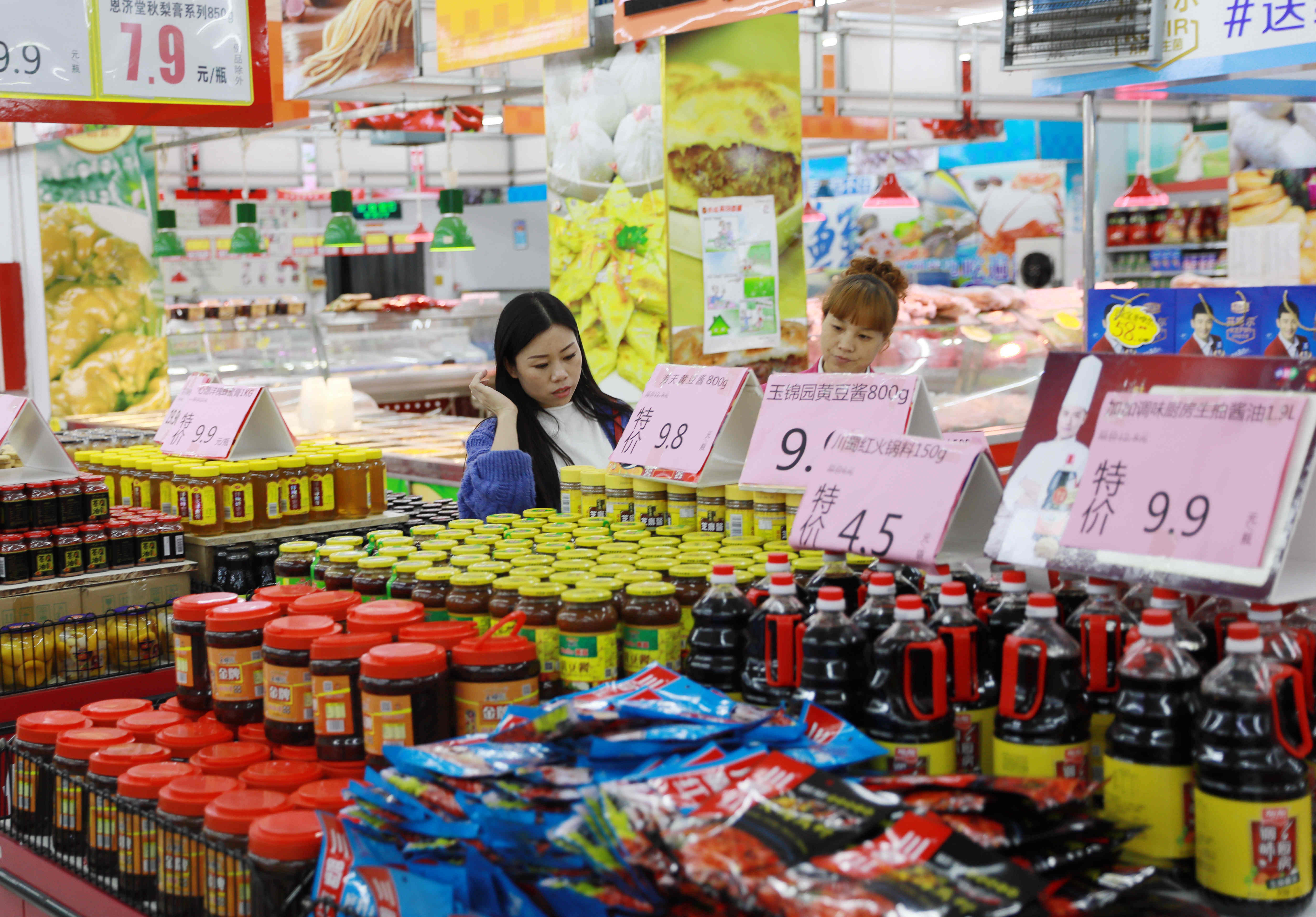
A customer selects goods at a supermarket in Xingtai, north China's Hebei Province, Oct. 15, 2019. (Xinhua/Song Jie)
Keeping consumer prices stable is high on the government agenda, as the State Council urged efforts in an executive meeting on Sept. 26 to secure the supply of basic necessities, track and analyze the trend of commodity prices in the international market, and strengthen market supervision and price monitoring.
Excluding food and energy, the core inflation level remains relatively low, noted analysts.
"The CPI uptick we're experiencing now indicates short-term structural inflation driven by pork prices that requires no monetary policy-level adjustments," said Zhang Jun, an analyst at Morgan Stanley Huaxin Securities.
Tuesday's data also showed the CPI in urban and rural areas registered year-on-year growth of 2.8 percent and 3.6 percent, respectively.
The producer price index, which measures costs for goods at the factory gate, fell 1.2 percent year on year in September. ■
