BANDAR SERI BEGAWAN, July 11 (Xinhua) -- Brunei Darussalam's Gross Domestic Product (GDP) posted a negative growth of 0.5 percent year-on-year at constant prices in the first quarter, the latest report issued by the Department of Economic Planning and Development showed.
The report showed that the sultanate's GDP was estimated at 4.73 billion Brunei dollars (3.4 billion U.S. dollars) in the first quarter of 2019, compared to 4.753 billion Brunei dollars in the first quarter of 2018.
The oil and gas sector in the first quarter declined 2.5 percent at constant prices year-on-year, which was mainly associated with the decrease in the manufacture of liquefied natural gas and methanol by 6.5 percent and oil and gas mining by 1.0 percent.
According to the report, the production of natural gas declined to 35.5 million cubic meters per day in the first quarter from 37.7 million cubic meters per day in the first quarter of 2018.
Meanwhile, crude oil production increased slightly from 125,600 barrel per day in the first quarter of 2018 to 126,800 barrel per day in the first quarter this year. However, the average oil price in the first quarter this year declined 3.4 percent from 69.5 U.S. dollars per barrel in the quarter of 2018 to 67.2 U.S. dollars per barrel in the first quarter this year.
The report stated that the Agriculture, Forestry and Fishery sector declined 3.3 percent in the first quarter this year due to the decline in the production of vegetables, fruits and other agricultural products by 17.4 percent, livestock and poultry by 5.1 percent and fishery 3.8 percent.
The industrial sector also decreased 2.3 percent after a decline of 2.3 percent in the fourth quarter of 2018.
Meanwhile, the ASEAN+3 Macroeconomic Research Office (AMRO) in its Annual Consultation Report published in May, stated that Brunei's economy slowed down in 2018 but is expected to pick up in 2019, while inflation will likely to continue to rise moderately.
The major economic risks are mainly from domestic factors as a result of its high reliance on the oil and gas sector. While the government has enhanced its efforts to develop other industries, the role of the oil and gas sector in GDP growth, exports and fiscal revenue remained high, the report said.
On the external side, the risk mainly stems from the possibility of a sharp decline in global oil and gas prices, while other risks such as escalating global trade tensions and a sharp tightening of global financial conditions are expected to have a small impact on Brunei's economy.
"Policy efforts on structural reforms and to diversify the economy away from the oil and gas sector into manufacturing, tourism, agriculture, aquaculture and other non-traditional industries should be continued to enhance Brunei Darussalam's long-term growth prospects," AMRO added.
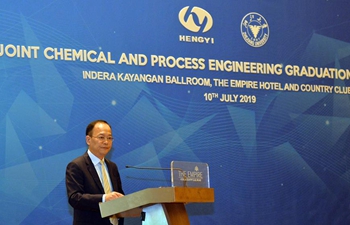
The Asian Development Outlook 2019 report in April stated that the start of downstream production at the biggest China-Brunei joint venture Hengyi Industries' refinery project and construction on the Brunei Fertilizer Industries plant and Temburong Bridge may stimulate growth.