WUHAN, March 17 (Xinhua) -- More than 800 villagers have returned home to start their own businesses in central China's Hubei Province since a string of favorable policies were introduced to revitalize the rural economy last year.
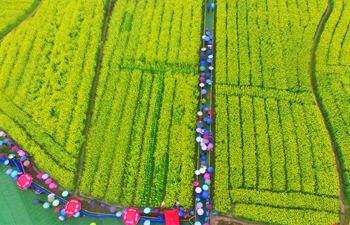
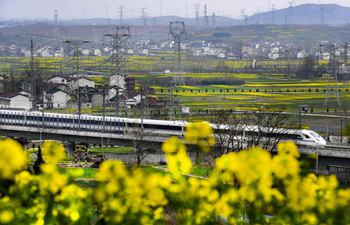
Huangpi District in Wuhan, the provincial capital, was once remote underdeveloped countryside that was isolated from the outside world due to a poor transportation infrastructure. Last year, it received over 20 million tourists that brought a revenue of over 10 billion yuan (1.6 billion U.S. dollars) in 2017.
Over a quarter of the population in Huangpi are engaged in the tourist industry now, with a yearly average income of 30,000 yuan from no more than 2,000 yuan a dozen years ago.
Over 100,000 rural residents have shaken off poverty because of tourism, which has created jobs for over 250,000 people in the district.
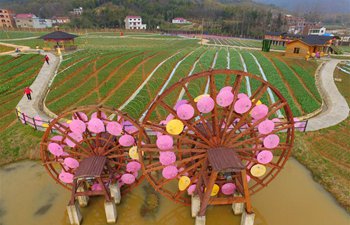
A tourist center has been built in the village of Liujiazhai, Lijiaji Neighborhood of Huangpi District, for instance, muddy roads have been cemented, even traffic congestion has become common during peak seasons.
As more and more villagers chose to transfer their land to the rural cooperative and become shareholders, they have been freed from farm work and engaged themselves in tourism.
Yu Honghua, 55 and a poverty-ridden villager from Liujiazhai, used to be migrant worker in the city and earn about 2,000 yuan a month. Last year, he returned home to work in a fruit picking garden.
"With the fruit-picking salary and dividends on the land from the cooperative, I make over 4,000 yuan every month," Yu said.
Yu and his wife both worked as gardeners in the park. He also breeds crayfish, which bring him additional income in harvest seasons. Their adult daughter suffers from leukemia. Expensive medical care once put the family in deep poverty.
"Drug therapy costs about 3,000 yuan a month when she is in stable condition, but the costs will surge to over 20,000 yuan if she has a relapse," he said.
Thanks to national funds for assisting the treatment of poor families, nearly 80 percent of the medical costs are now covered by the government.
"With steady incomes and better medical insurance, life has become easier. We are confident of getting rid of poverty in the near future," he said.
According to China National Tourism Administration, rural areas attracted 2.5 billion tourists last year, generating spending of over 1.4 trillion yuan. Tourism has become a new channel of revenue for rural residents.
Restaurants featuring house special dishes, hostels with unique staying experiences, agencies that provide personalized tourist plans ... the booming economy is reshaping the rural landscape. Nearly 20 billion yuan of social capital has entered the tourism industry in Huangpi so far.
Yu Huanchun, 68, has recently resettled in the village of Songjiaji, his ancestral home, in Huangpi. He was a horticulturist for the railway station of Wuhan before retiring. Last year he took the initiative to work in landscape design after he saw the burgeoning tourism in the village.
"With improved infrastructure and more people from everywhere, here is a good place for me to enjoy my life in retirement," he said.