SAN FRANCISCO, Jan. 19 (Xinhua) -- U.S. researchers have found that climate change resulting from more carbon dioxide emissions increases flower blooms in a tropical forest in Panama, according to a new study released Friday.
The study led by Stephanie Pau, an assistant professor of geography at the U.S. Florida State University, revealed a surprising link between the surging atmospheric carbon dioxide and flower blooms in tropical forests on Panama's Barro Colorado Island, a 1,560-hectare island located in the man-made Gatun Lake in the middle of the Panama Canal.
The findings of the study were contained in a paper published in the journal Global Change Biology.
Pau said the tropical forests that have evolved over millennia to flourish in warm, equatorial conditions may be more sensitive to subtle climatic changes than some ecologists had predicted.
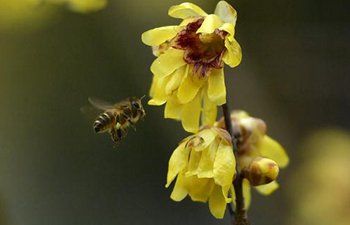
She said her team has noticed that the tropical forests produced more flowers in response to rising temperatures and carbon dioxide emissions over the past several decades.
She collected a large amount of plant materials from the island over 28 years, which enabled her and her team to study how climatic elements, such as temperature, rainfall, light and carbon dioxide, affected the annual flowering activity and flowering duration of different species present in the forest.
The study showed that carbon dioxide had the most significant impact on the increase in flowers, which converted the carbon dioxide into energy in the form of sugars to fuel vital life processes.
As more carbon dioxide is released into the atmosphere, plants have more opportunities to produce new energy.
Pau's study suggests that the increased reproductive activity of the forests on Barro Colorado Island has close relations with the dramatic growth in the energy produced from carbon dioxide.