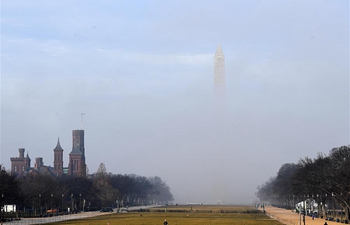
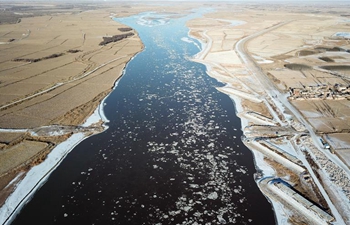
TAIYUAN, Jan. 10 (Xinhua) -- Bidding farewell to days of thick black dust, dozens of mines have halted production in the coal-rich province of Shanxi in north China despite huge economic losses.
As many as 27 coal mines were shut down last year, with production capacity totaling 22.7 million tonnes, according to the provincial coal industry association.
The province also stopped renewal of mining permissions for 25 mining companies, banning their operations in the province's nature reserves.
Shanxi is a vital energy base. By the end of 2015, it held 270.9 billion tonnes of known coal reserves, accounting for 17.3 percent of the country's total.
Coal mining has caused serious air pollution and severely damaged the groundwater system, resulting in a mined-out area of 5,000 square kilometers.
Excessive mining, a water-consuming industry, has also led to shrinking or dried-up natural springs in the province.
The province is prioritizing economic transformation to improve Shanxi's industrial pattern and detach itself from the traditional coal mining industry.
Sales, transportation and use of coal have been banned in the provincial capital of Taiyuan since October.
China's State Council issued a guideline in September to support the region's "green" transformation.
"The government is offering money, land, and preferential policies to create a favorable business environment for emerging industries," said Li Yonghui, deputy general manager of a clean energy company called Jinneng.
Li said annual production capacity of solar cells and parts of his company almost tripled to 1,300 MW between 2014 and 2016, registering an increase in sales revenue from 290 million yuan (44.7 million U.S. dollars) to 1.86 billion yuan.
Due to intensified measures and government support, coal's contribution to the region's GDP is decreasing.
The provincial bureau of statistics said that more than 40 million tonnes of coal production capacity were eliminated in Shanxi in the past two years. It also cut coal production by 143 million tonnes in 2016, accounting for around 40 percent of China's total cuts.
Investment in emerging industries accounted for 53.1 percent of the total investment in the province in 2015, up almost 20 percentage points compared with 2011. The added value of non-coal sectors now accounts for more than half of the total, according to Sun Xiuling with the Shanxi Academy of Social Sciences.
Shanxi has also listed electric vehicles as its potential leading industry in the future. Chinese car firm BYD opened an electric car production base in Taiyuan in 2016.
According to the government, Shanxi plans to spend 5.2 billion yuan installing 190,000 charging facilities for an estimated 200,000 electricity-powered vehicles expected to be on the road by 2020.
Taiyuan replaced all its 8,000-plus cabs with electric ones about a year ago, the first city ever in China to eliminate fuel cabs. The city also plans to add 1,000 electric buses this year to further cut emissions.