中文字幕网伦射乱中文-超清中文乱码字幕在线观看-亚洲v国产v欧美v久久久久久-久久性网-手机在线成人av-成人六区-国产人与zoxxxx另类一一-青青草国产久久精品-蜜桃av久久久一区二区三区麻豆-成人av一区二区免费播放-在线视频麻豆-www爱爱-成人免费看片视频-性欧美老肥妇喷水-五月99久久婷婷国产综合亚洲-亚洲最色-各种含道具高h调教1v1男男-91丨porny丨国产-国产精品无码专区在线观看不卡-大香伊人

 
France to implement "national decisions" on digital tax despite Trump's threat
                 Source: Xinhua | 2019-07-27 21:34:34 | Editor: huaxia

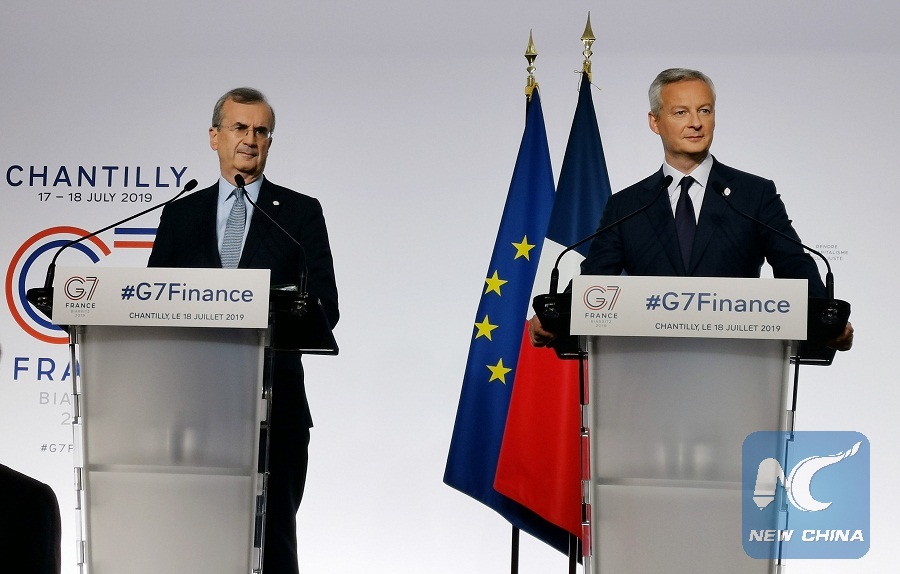
French Finance Minister Bruno Le Maire (R) and Governor of the Bank of France Francois Villeroy de Galhau attend a press conference at the end of the G7 Finance meeting in Chantilly, France, July 18, 2019. (Xinhua/Jiang Hua)

PARIS, July 27 (Xinhua) -- French Minister of the Economy and Finance, Bruno Le Maire, said on Friday that the digital tax on internet giants was "a national decision" that the government would put on the ground, defying U.S. threat of "a substantial reciprocal action".

"France will implement its national decisions," French newspaper Le Figaro quoted Le Maire as saying, in response to U.S. President Donald Trump's warning.

"The taxation of digital activities is a challenge that concerns all of us. We want to reach an agreement on this issue in the framework of the G7 and the OECD," Le Maire said.

The French Parliament passed a new law to tax digital giants on July 11, making France one of the first countries to tax "GAFA" companies, namely Google, Amazon, Facebook and Apple.

"If anybody taxes them, it should be their home Country, the USA. We will announce a substantial reciprocal action on Macron's foolishness shortly. I've always said American wine is better than French wine," Trump wrote in his tweet.

The French Digital Services Tax (DST) imposes a 3-percent tax on total annual revenues generated by some companies from providing certain digital services to, or aimed at, French users.

The tax applies only to companies with total annual revenues from the covered services of at least 750 million euros (834 million U.S. dollars) globally and 25 million euros in France.

The tax was initially adopted by France's National Assembly, the lower house of parliament, on July 4. It is expected to collect 400 million euros this year and 650 million euros by 2022.

Despite a setback in Brussels to reach a European Union-wide taxation, the French government decided to impose the tax at the national level.

In response, the United States Trade Representative (USTR) announced that it has initiated an investigation against the French law and its impact on U.S. businesses.

The USTR launched the investigation under Section 301 of the Trade Act of 1974, accusing the French government of "unfairly targeting the tax at certain U.S.-based technology companies". It has been quoting Section 301 in investigating and interfering with foreign countries' policies.

Section 301 is part of an outdated U.S. trade law adopted in 1974 that allows the U.S. president to unilaterally impose tariffs or other trade restrictions on foreign countries.

Back to Top Close
Xinhuanet

France to implement "national decisions" on digital tax despite Trump's threat

Source: Xinhua 2019-07-27 21:34:34

French Finance Minister Bruno Le Maire (R) and Governor of the Bank of France Francois Villeroy de Galhau attend a press conference at the end of the G7 Finance meeting in Chantilly, France, July 18, 2019. (Xinhua/Jiang Hua)

PARIS, July 27 (Xinhua) -- French Minister of the Economy and Finance, Bruno Le Maire, said on Friday that the digital tax on internet giants was "a national decision" that the government would put on the ground, defying U.S. threat of "a substantial reciprocal action".

"France will implement its national decisions," French newspaper Le Figaro quoted Le Maire as saying, in response to U.S. President Donald Trump's warning.

"The taxation of digital activities is a challenge that concerns all of us. We want to reach an agreement on this issue in the framework of the G7 and the OECD," Le Maire said.

The French Parliament passed a new law to tax digital giants on July 11, making France one of the first countries to tax "GAFA" companies, namely Google, Amazon, Facebook and Apple.

"If anybody taxes them, it should be their home Country, the USA. We will announce a substantial reciprocal action on Macron's foolishness shortly. I've always said American wine is better than French wine," Trump wrote in his tweet.

The French Digital Services Tax (DST) imposes a 3-percent tax on total annual revenues generated by some companies from providing certain digital services to, or aimed at, French users.

The tax applies only to companies with total annual revenues from the covered services of at least 750 million euros (834 million U.S. dollars) globally and 25 million euros in France.

The tax was initially adopted by France's National Assembly, the lower house of parliament, on July 4. It is expected to collect 400 million euros this year and 650 million euros by 2022.

Despite a setback in Brussels to reach a European Union-wide taxation, the French government decided to impose the tax at the national level.

In response, the United States Trade Representative (USTR) announced that it has initiated an investigation against the French law and its impact on U.S. businesses.

The USTR launched the investigation under Section 301 of the Trade Act of 1974, accusing the French government of "unfairly targeting the tax at certain U.S.-based technology companies". It has been quoting Section 301 in investigating and interfering with foreign countries' policies.

Section 301 is part of an outdated U.S. trade law adopted in 1974 that allows the U.S. president to unilaterally impose tariffs or other trade restrictions on foreign countries.

010020070750000000000000011100001382633361