中文字幕网伦射乱中文-超清中文乱码字幕在线观看-亚洲v国产v欧美v久久久久久-久久性网-手机在线成人av-成人六区-国产人与zoxxxx另类一一-青青草国产久久精品-蜜桃av久久久一区二区三区麻豆-成人av一区二区免费播放-在线视频麻豆-www爱爱-成人免费看片视频-性欧美老肥妇喷水-五月99久久婷婷国产综合亚洲-亚洲最色-各种含道具高h调教1v1男男-91丨porny丨国产-国产精品无码专区在线观看不卡-大香伊人

 
China's expertise in infrastructure promotes development, connectivity: experts
                 Source: Xinhua | 2019-04-15 01:14:06 | Editor: huaxia

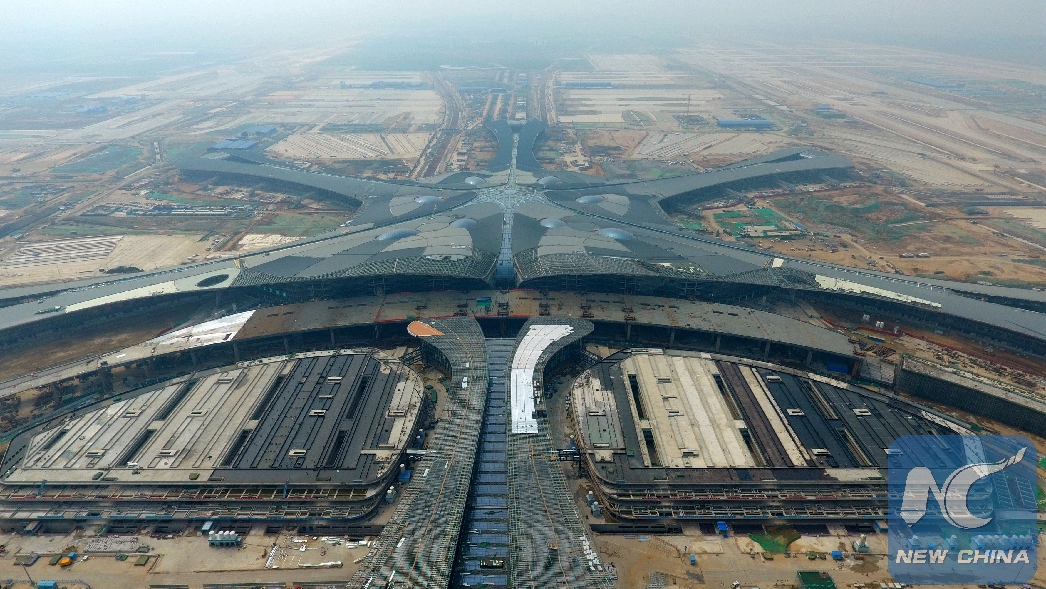
Aerial photo taken on April 28, 2018 shows staff members working on an overpass in front of the terminal of a new airport under construction in Beijing, capital of China. (Xinhua/Zhang Chenlin)

BOSTON, April 13 (Xinhua) -- China's vast infrastructure expertise is set to bolster connectivity across the world, said the president of the Asian Infrastructure Investment Bank (AIIB) on Saturday.

During a panel discussion at the 22nd Harvard China Forum on Saturday in Boston, United States, the AIIB, a multilateral development bank with a mission to improve social and economic outcomes in Asia, became center stage.

"AIIB was designed to be a multilateral development bank promoting infrastructure development, particularly connectivity," said Jin Liqun, president of AIIB, "because China, from its own development experience, understands how important it is to improve infrastructure."

"Infrastructure bottlenecks are the sewage problems of developments," Jin said. "I would say it's also a problem for the United States."

Jin sees the goal of AIIB's international development financing program as promoting connectivity throughout Asia and the world, and that aligns perfectly with the Belt and Road Initiative (BRI).

Proposed by China in 2013 to promote common growth and shared benefits, the BRI involves infrastructure development, trade and investment facilitation and people-to-people exchanges that aim to improve connectivity on a trans-continental scale.

"The Belt and Road program, in my understanding, is a platform for all participating countries to work together, including on connectivity," said Jin. "Connectivity is important for the economic development and regional development, and of course for world peace and prosperity."

"We can support Belt and Road programs as long as they meet our 'three criteria' -- financial sustainability, environmental improvement and social acceptance," said Jin.

With more countries participate in the initiative, economists sees fewer problems overall.

"When it comes to the debt that some of us talked about, I would say the view that Belt and Road is a debt trap probably is overstated," said Liu Qian, managing director of The Economist Group in Greater China.

"If we base our assessment on China's track record more generally, I would still be relatively optimistic as to how this Belt and Road Initiative will look like in a few years," said Louis Kuijs, head of Asia Economics at Oxford Economics based in Hong Kong.

China was once a receiver of international development assistance (IDA) from the World Bank or other development agencies. But in recent years, both Chinese and foreign experts witnessed a shift in position from a receiver to a helper.

"By now, China has become quite a large contributor to the World Bank's IDA facilities, which is a remarkable shift," said Kuijs.

"Accumulated wealth cannot buy you respect unless you help do good things for the rest of the world," said Jin. "So China has been trying to invest and help other countries through its own experience."

Back to Top Close
Xinhuanet

China's expertise in infrastructure promotes development, connectivity: experts

Source: Xinhua 2019-04-15 01:14:06

Aerial photo taken on April 28, 2018 shows staff members working on an overpass in front of the terminal of a new airport under construction in Beijing, capital of China. (Xinhua/Zhang Chenlin)

BOSTON, April 13 (Xinhua) -- China's vast infrastructure expertise is set to bolster connectivity across the world, said the president of the Asian Infrastructure Investment Bank (AIIB) on Saturday.

During a panel discussion at the 22nd Harvard China Forum on Saturday in Boston, United States, the AIIB, a multilateral development bank with a mission to improve social and economic outcomes in Asia, became center stage.

"AIIB was designed to be a multilateral development bank promoting infrastructure development, particularly connectivity," said Jin Liqun, president of AIIB, "because China, from its own development experience, understands how important it is to improve infrastructure."

"Infrastructure bottlenecks are the sewage problems of developments," Jin said. "I would say it's also a problem for the United States."

Jin sees the goal of AIIB's international development financing program as promoting connectivity throughout Asia and the world, and that aligns perfectly with the Belt and Road Initiative (BRI).

Proposed by China in 2013 to promote common growth and shared benefits, the BRI involves infrastructure development, trade and investment facilitation and people-to-people exchanges that aim to improve connectivity on a trans-continental scale.

"The Belt and Road program, in my understanding, is a platform for all participating countries to work together, including on connectivity," said Jin. "Connectivity is important for the economic development and regional development, and of course for world peace and prosperity."

"We can support Belt and Road programs as long as they meet our 'three criteria' -- financial sustainability, environmental improvement and social acceptance," said Jin.

With more countries participate in the initiative, economists sees fewer problems overall.

"When it comes to the debt that some of us talked about, I would say the view that Belt and Road is a debt trap probably is overstated," said Liu Qian, managing director of The Economist Group in Greater China.

"If we base our assessment on China's track record more generally, I would still be relatively optimistic as to how this Belt and Road Initiative will look like in a few years," said Louis Kuijs, head of Asia Economics at Oxford Economics based in Hong Kong.

China was once a receiver of international development assistance (IDA) from the World Bank or other development agencies. But in recent years, both Chinese and foreign experts witnessed a shift in position from a receiver to a helper.

"By now, China has become quite a large contributor to the World Bank's IDA facilities, which is a remarkable shift," said Kuijs.

"Accumulated wealth cannot buy you respect unless you help do good things for the rest of the world," said Jin. "So China has been trying to invest and help other countries through its own experience."

010020070750000000000000011105091379769891