中文字幕网伦射乱中文-超清中文乱码字幕在线观看-亚洲v国产v欧美v久久久久久-久久性网-手机在线成人av-成人六区-国产人与zoxxxx另类一一-青青草国产久久精品-蜜桃av久久久一区二区三区麻豆-成人av一区二区免费播放-在线视频麻豆-www爱爱-成人免费看片视频-性欧美老肥妇喷水-五月99久久婷婷国产综合亚洲-亚洲最色-各种含道具高h调教1v1男男-91丨porny丨国产-国产精品无码专区在线观看不卡-大香伊人

 
Spotlight: American, Chinese scientists call for international collaboration in science research
                 Source: Xinhua | 2019-02-18 02:54:20 | Editor: huaxia

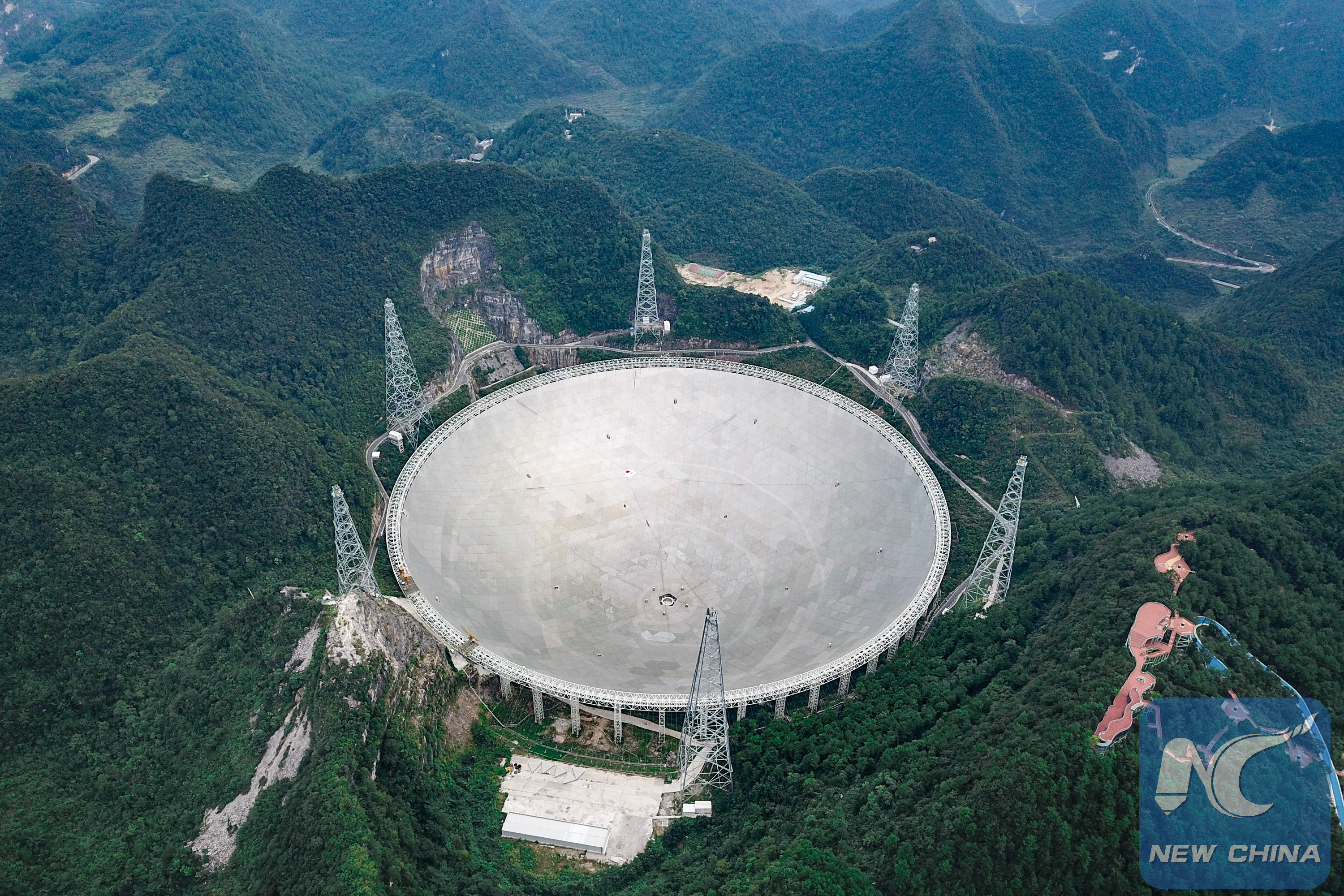
Photo taken on Sept. 10, 2018 shows China's Five-hundred-meter Aperture Spherical Radio Telescope (FAST) in southwest China's Guizhou Province. (Xinhua/Ou Dongqu)

WASHINGTON, Feb. 17 (Xinhua) -- American and Chinese scientists have called for international collaboration in science research at the ongoing annual meeting of American Association for the Advancement of Science (AAAS) to build more trust between two countries.

It came after a Chinese elementary particle and accelerator physicist making a roadshow for China's megascience projects in high energy physics at a seminar.

Wang Yifang, director of the Institute of High Energy Physics (IHEP) of the Chinese Academy of Sciences, reviewed how China and the United States worked together to complete a neutrino experiment at China's Daya Bay Reactor and envisioned to have more such cooperation in a cosmic ray observatory project called LHAASO and a more ambitious circular collider in the pipeline.

"Actually, in past 30 years, no large-scale high-energy physics project was done by one country," Wang told Xinhua. "And now it is the time for newly developed emerging countries to contribute more to science."

Wang was echoed by Caroline Wagner, a science policy expert at Ohio State University. Wagner told Xinhua that the "openness" was critical for basic science research and the key to it was "to share," at all levels.

International collaboration is a major topic on this year's AAAS meeting with a theme of "Science Transcending Boundaries." It came against looming challenges for international scientific partnership.

Peter Michelson, a Stanford physicist, attributed them to an era of renewed nationalism and anti-globalization and of evidence-based research losing ground.

"The best collaborators may be in other countries, and former graduate students and postdocs are potential collaborators," said Michelson.

However, a memo released by the U.S. Department of Energy (DOE) last November restricted DOE-funded researchers working in "emerging research areas and technologies" from collaborating with colleagues from unspecified "sensitive" countries, which may block many foreign research cooperation and cast shadows on others.

Ali Khounsary, a research professor of physics at Illinois Institute of Technology, lodged his objection at a seminar, saying choosing collaborators by their citizenship "unbelievable."

"Cooperation in basic science should be immunized from politics and developed in a global way since we have common interest, common benefits and risks, common tools and methods and common issues," said Wang.

Michelson told Xinhua that strong international partnership would become more important for future scientific progress as science facilities come with increasing size, complexity and cost.

Michelson took delight in talking about a collaboration between China and the United States to have discovered the millisecond pulsar for the first time.

In April last year, China's Five-hundred-meter Aperture Spherical radio Telescope (FAST) discovered a radio millisecond pulsar coincident with the unassociated gamma-ray source in the Fermi Large Area Telescope (LAT) point-source list.

More than one-third of investment and researchers of Daya Bay Reactor neutrino experiment came from the United States, according to Wang.

Scientists at the meeting did not consider international collaboration a conflicting thing against international competition.

Jonathan Adams, an analyst at Philadelphia-based Clarivate Analytics, told Xinhua that the top institutions, which are the major players in science research, "need to recruit talent globally" to gain their leadership.

Wang said that the competition between different groups and projects were incentives for science progress, but within a group or a project, researchers with diversified background could produce better results, or in Michelson's word "collaborate to compete."

The U.S. institutional authors collaborate most frequently with authors from China, currently the largest producer of publications. China accounted for 22.9 percent of U.S. internationally coauthored publications in 2016, according to the latest science and engineering indicator released by the U.S. National Science Board.

Some Americans are skeptical about U.S.-China cooperation, partly due to lack of trust, said Wagner, but "we should collaborate to build trust," "rather than stop it until we have trust."

AAAS is the world's largest general scientific society and its annual meetings promote communication among policymakers, researchers and the public.

Back to Top Close
Xinhuanet

Spotlight: American, Chinese scientists call for international collaboration in science research

Source: Xinhua 2019-02-18 02:54:20

Photo taken on Sept. 10, 2018 shows China's Five-hundred-meter Aperture Spherical Radio Telescope (FAST) in southwest China's Guizhou Province. (Xinhua/Ou Dongqu)

WASHINGTON, Feb. 17 (Xinhua) -- American and Chinese scientists have called for international collaboration in science research at the ongoing annual meeting of American Association for the Advancement of Science (AAAS) to build more trust between two countries.

It came after a Chinese elementary particle and accelerator physicist making a roadshow for China's megascience projects in high energy physics at a seminar.

Wang Yifang, director of the Institute of High Energy Physics (IHEP) of the Chinese Academy of Sciences, reviewed how China and the United States worked together to complete a neutrino experiment at China's Daya Bay Reactor and envisioned to have more such cooperation in a cosmic ray observatory project called LHAASO and a more ambitious circular collider in the pipeline.

"Actually, in past 30 years, no large-scale high-energy physics project was done by one country," Wang told Xinhua. "And now it is the time for newly developed emerging countries to contribute more to science."

Wang was echoed by Caroline Wagner, a science policy expert at Ohio State University. Wagner told Xinhua that the "openness" was critical for basic science research and the key to it was "to share," at all levels.

International collaboration is a major topic on this year's AAAS meeting with a theme of "Science Transcending Boundaries." It came against looming challenges for international scientific partnership.

Peter Michelson, a Stanford physicist, attributed them to an era of renewed nationalism and anti-globalization and of evidence-based research losing ground.

"The best collaborators may be in other countries, and former graduate students and postdocs are potential collaborators," said Michelson.

However, a memo released by the U.S. Department of Energy (DOE) last November restricted DOE-funded researchers working in "emerging research areas and technologies" from collaborating with colleagues from unspecified "sensitive" countries, which may block many foreign research cooperation and cast shadows on others.

Ali Khounsary, a research professor of physics at Illinois Institute of Technology, lodged his objection at a seminar, saying choosing collaborators by their citizenship "unbelievable."

"Cooperation in basic science should be immunized from politics and developed in a global way since we have common interest, common benefits and risks, common tools and methods and common issues," said Wang.

Michelson told Xinhua that strong international partnership would become more important for future scientific progress as science facilities come with increasing size, complexity and cost.

Michelson took delight in talking about a collaboration between China and the United States to have discovered the millisecond pulsar for the first time.

In April last year, China's Five-hundred-meter Aperture Spherical radio Telescope (FAST) discovered a radio millisecond pulsar coincident with the unassociated gamma-ray source in the Fermi Large Area Telescope (LAT) point-source list.

More than one-third of investment and researchers of Daya Bay Reactor neutrino experiment came from the United States, according to Wang.

Scientists at the meeting did not consider international collaboration a conflicting thing against international competition.

Jonathan Adams, an analyst at Philadelphia-based Clarivate Analytics, told Xinhua that the top institutions, which are the major players in science research, "need to recruit talent globally" to gain their leadership.

Wang said that the competition between different groups and projects were incentives for science progress, but within a group or a project, researchers with diversified background could produce better results, or in Michelson's word "collaborate to compete."

The U.S. institutional authors collaborate most frequently with authors from China, currently the largest producer of publications. China accounted for 22.9 percent of U.S. internationally coauthored publications in 2016, according to the latest science and engineering indicator released by the U.S. National Science Board.

Some Americans are skeptical about U.S.-China cooperation, partly due to lack of trust, said Wagner, but "we should collaborate to build trust," "rather than stop it until we have trust."

AAAS is the world's largest general scientific society and its annual meetings promote communication among policymakers, researchers and the public.

010020070750000000000000011100001378294151