中文字幕网伦射乱中文-超清中文乱码字幕在线观看-亚洲v国产v欧美v久久久久久-久久性网-手机在线成人av-成人六区-国产人与zoxxxx另类一一-青青草国产久久精品-蜜桃av久久久一区二区三区麻豆-成人av一区二区免费播放-在线视频麻豆-www爱爱-成人免费看片视频-性欧美老肥妇喷水-五月99久久婷婷国产综合亚洲-亚洲最色-各种含道具高h调教1v1男男-91丨porny丨国产-国产精品无码专区在线观看不卡-大香伊人

 
UN chief laments gender gap in STEM
                 Source: Xinhua | 2019-02-12 03:27:28 | Editor: huaxia

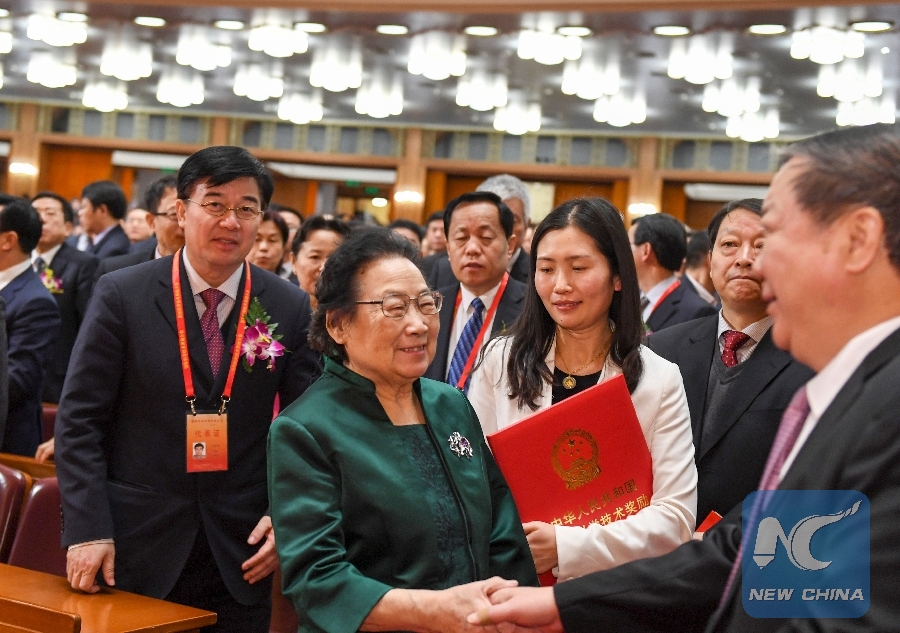
File Photo: Tu Youyou (front L), a pharmacologist of the China Academy of Chinese Medical Sciences, receives congratulations during an annual ceremony to honor distinguished scientists and research achievements in Beijing, capital of China, Jan. 9, 2017. (Xinhua/Li Xueren)

UNITED NATIONS, Feb. 11 (Xinhua) -- UN Secretary-General Antonio Guterres on Monday lamented the lack of opportunities for women and girls in science, technology, engineering and mathematics (STEM).

Women and girls remain "woefully under-represented" in STEM while they are vital in all these areas, said Guterres in a message on the International Day of Women and Girls in Science.

Gender stereotypes, a lack of visible role models and unsupportive or even hostile policies and environments can keep women and girls from pursuing these careers, he noted.

Skills in STEM drive innovation and are critical to achieving the Sustainable Development Goals, he said. "The world cannot afford to miss out on the contributions of half our population."

Guterres asked for concerted efforts to overcome the obstacles. "We must tackle misconceptions about girls' abilities. We must promote access to learning opportunities for women and girls, particularly in rural areas. And we must do more to change workplace culture so that girls who dream of being scientists, engineers and mathematicians can enjoy fulfilling careers in these fields."

"Let us ensure that every girl, everywhere, has the opportunity to realize her dreams, grow into her power and contribute to a sustainable future for all."

In 2015, the UN General Assembly designated Feb. 11 every year as the International Day of Women and Girls in Science to promote gender equality in STEM.

At present, less than 30 percent of researchers worldwide are women, according to data from the UN Educational, Scientific and Cultural Organization (UNESCO).

UNESCO data between 2014 and 2016 show that only around 30 percent of all female students select STEM-related fields in higher education. Globally, female students' enrolment is particularly low in information and communications technology (3 percent), natural science, mathematics and statistics (5 percent) and in engineering, manufacturing and construction (8 percent).

Back to Top Close
Xinhuanet

UN chief laments gender gap in STEM

Source: Xinhua 2019-02-12 03:27:28

File Photo: Tu Youyou (front L), a pharmacologist of the China Academy of Chinese Medical Sciences, receives congratulations during an annual ceremony to honor distinguished scientists and research achievements in Beijing, capital of China, Jan. 9, 2017. (Xinhua/Li Xueren)

UNITED NATIONS, Feb. 11 (Xinhua) -- UN Secretary-General Antonio Guterres on Monday lamented the lack of opportunities for women and girls in science, technology, engineering and mathematics (STEM).

Women and girls remain "woefully under-represented" in STEM while they are vital in all these areas, said Guterres in a message on the International Day of Women and Girls in Science.

Gender stereotypes, a lack of visible role models and unsupportive or even hostile policies and environments can keep women and girls from pursuing these careers, he noted.

Skills in STEM drive innovation and are critical to achieving the Sustainable Development Goals, he said. "The world cannot afford to miss out on the contributions of half our population."

Guterres asked for concerted efforts to overcome the obstacles. "We must tackle misconceptions about girls' abilities. We must promote access to learning opportunities for women and girls, particularly in rural areas. And we must do more to change workplace culture so that girls who dream of being scientists, engineers and mathematicians can enjoy fulfilling careers in these fields."

"Let us ensure that every girl, everywhere, has the opportunity to realize her dreams, grow into her power and contribute to a sustainable future for all."

In 2015, the UN General Assembly designated Feb. 11 every year as the International Day of Women and Girls in Science to promote gender equality in STEM.

At present, less than 30 percent of researchers worldwide are women, according to data from the UN Educational, Scientific and Cultural Organization (UNESCO).

UNESCO data between 2014 and 2016 show that only around 30 percent of all female students select STEM-related fields in higher education. Globally, female students' enrolment is particularly low in information and communications technology (3 percent), natural science, mathematics and statistics (5 percent) and in engineering, manufacturing and construction (8 percent).

010020070750000000000000011100001378139831