中文字幕网伦射乱中文-超清中文乱码字幕在线观看-亚洲v国产v欧美v久久久久久-久久性网-手机在线成人av-成人六区-国产人与zoxxxx另类一一-青青草国产久久精品-蜜桃av久久久一区二区三区麻豆-成人av一区二区免费播放-在线视频麻豆-www爱爱-成人免费看片视频-性欧美老肥妇喷水-五月99久久婷婷国产综合亚洲-亚洲最色-各种含道具高h调教1v1男男-91丨porny丨国产-国产精品无码专区在线观看不卡-大香伊人

 
Sahara desert swings between wet and dry every 20,000 years: study
                 Source: Xinhua | 2019-01-03 05:54:28 | Editor: huaxia

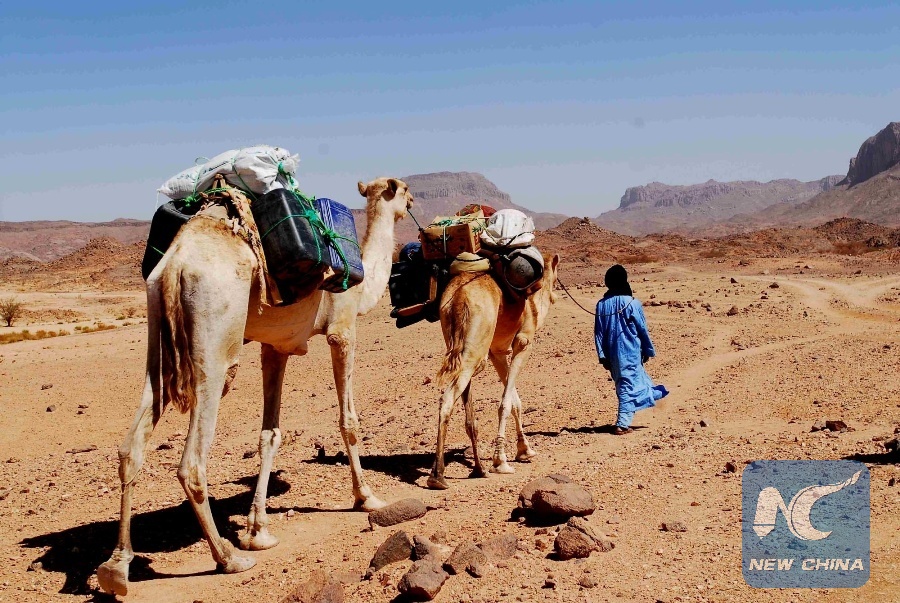
Xinhua file photo

WASHINGTON, Jan. 2 (Xinhua) -- A study published on Wednesday in the journal Science Advances has shown that the Sahara desert and North Africa in general swing between wet and dry climates every 20,000 years.

Researchers from Massachusetts Institute of Technology (MIT) said this climatic pendulum was mainly driven by changes to the Earth's axis as the planet orbits the sun, which in turn affect the distribution of sunlight between seasons.

They analyzed dust deposited off the coast of west Africa over the last 240,000 years, and measured the concentrations of a rare isotope of thorium in each layer to determine how rapidly dust was accumulating on the seafloor.

They found the Earth swings from more sunlight in summer to less, and back again.

The increased solar flux in North Africa can intensify the region's monsoon activity, which in turn makes for a wetter, "greener" Sahara, according to the researchers.

Accordingly, when the planet's axis swings toward an angle that reduces the amount of incoming summer sunlight, it produces a drier, parched climate like what we see today.

"We feel this is a useful time series to examine in order to understand the history of the Sahara desert and what times could have been good for humans to settle the Sahara desert and cross it to disperse out of Africa, versus times that would be inhospitable like today," said David McGee, an associate professor in MIT's Department of Earth, Atmospheric and Planetary Sciences.

Back to Top Close
Xinhuanet

Sahara desert swings between wet and dry every 20,000 years: study

Source: Xinhua 2019-01-03 05:54:28

Xinhua file photo

WASHINGTON, Jan. 2 (Xinhua) -- A study published on Wednesday in the journal Science Advances has shown that the Sahara desert and North Africa in general swing between wet and dry climates every 20,000 years.

Researchers from Massachusetts Institute of Technology (MIT) said this climatic pendulum was mainly driven by changes to the Earth's axis as the planet orbits the sun, which in turn affect the distribution of sunlight between seasons.

They analyzed dust deposited off the coast of west Africa over the last 240,000 years, and measured the concentrations of a rare isotope of thorium in each layer to determine how rapidly dust was accumulating on the seafloor.

They found the Earth swings from more sunlight in summer to less, and back again.

The increased solar flux in North Africa can intensify the region's monsoon activity, which in turn makes for a wetter, "greener" Sahara, according to the researchers.

Accordingly, when the planet's axis swings toward an angle that reduces the amount of incoming summer sunlight, it produces a drier, parched climate like what we see today.

"We feel this is a useful time series to examine in order to understand the history of the Sahara desert and what times could have been good for humans to settle the Sahara desert and cross it to disperse out of Africa, versus times that would be inhospitable like today," said David McGee, an associate professor in MIT's Department of Earth, Atmospheric and Planetary Sciences.

010020070750000000000000011100001377156151