中文字幕网伦射乱中文-超清中文乱码字幕在线观看-亚洲v国产v欧美v久久久久久-久久性网-手机在线成人av-成人六区-国产人与zoxxxx另类一一-青青草国产久久精品-蜜桃av久久久一区二区三区麻豆-成人av一区二区免费播放-在线视频麻豆-www爱爱-成人免费看片视频-性欧美老肥妇喷水-五月99久久婷婷国产综合亚洲-亚洲最色-各种含道具高h调教1v1男男-91丨porny丨国产-国产精品无码专区在线观看不卡-大香伊人

 
NASA's New Horizons to flyby mysterious Ultima Thule
                 Source: Xinhua | 2019-01-01 04:10:17 | Editor: huaxia

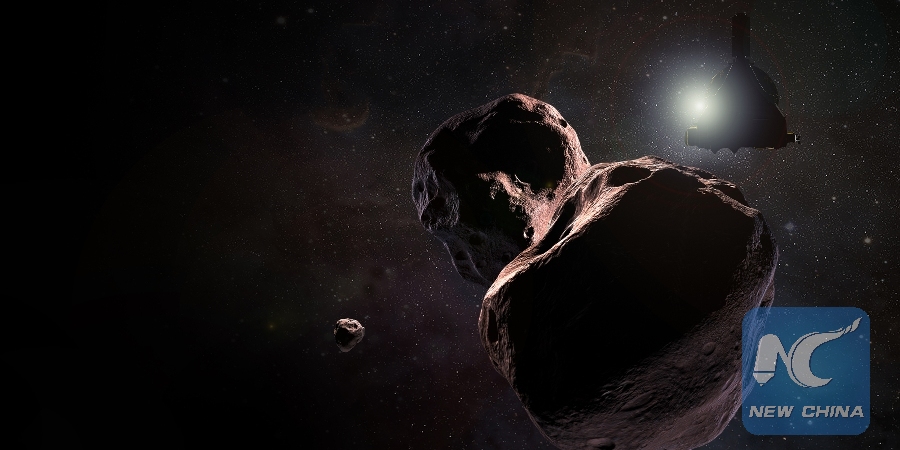
Artist's impression of NASA's New Horizons spacecraft encountering 2014 MU69, a Kuiper Belt object that orbits one billion miles (1.6 billion kilometers) beyond Pluto, on Jan. 1, 2019. (Credits: NASA/JHUAPL/SwRI/Steve Gribben)

LOS ANGELES, Dec. 31 (Xinhua) -- NASA's New Horizons spacecraft will flyby the Kuiper Belt object Ultima Thule on New Year's Day of 2019, making the farthest flyby in history.

The New Horizons is scheduled to flyby the object at 12:33 a.m. EST on Jan. 1.

The spacecraft will pass within 2,200 miles of the surface of the object at a velocity of some 31,500 miles per hour, providing the first close-up look at such a pristine building block of the solar system, according to NASA.

"The New Horizons team reports the spacecraft is healthy and on track for the historic flyby of #UltimaThule just after midnight tonight!" the team tweeted earlier Monday.

Ultima Thule, at 4 billion miles from the sun and and 1 billion miles from Pluto, will be the most distant object ever directly explored, according to NASA.

When the spacecraft arrives, it will turn a suite of instruments onto the mysterious object, and many of its mysteries will be unveiled.

It is the second historic rendezvous for New Horizons, which zipped by Pluto in July 2015 on the first-ever flyby of that world.

Back to Top Close
Xinhuanet

NASA's New Horizons to flyby mysterious Ultima Thule

Source: Xinhua 2019-01-01 04:10:17

Artist's impression of NASA's New Horizons spacecraft encountering 2014 MU69, a Kuiper Belt object that orbits one billion miles (1.6 billion kilometers) beyond Pluto, on Jan. 1, 2019. (Credits: NASA/JHUAPL/SwRI/Steve Gribben)

LOS ANGELES, Dec. 31 (Xinhua) -- NASA's New Horizons spacecraft will flyby the Kuiper Belt object Ultima Thule on New Year's Day of 2019, making the farthest flyby in history.

The New Horizons is scheduled to flyby the object at 12:33 a.m. EST on Jan. 1.

The spacecraft will pass within 2,200 miles of the surface of the object at a velocity of some 31,500 miles per hour, providing the first close-up look at such a pristine building block of the solar system, according to NASA.

"The New Horizons team reports the spacecraft is healthy and on track for the historic flyby of #UltimaThule just after midnight tonight!" the team tweeted earlier Monday.

Ultima Thule, at 4 billion miles from the sun and and 1 billion miles from Pluto, will be the most distant object ever directly explored, according to NASA.

When the spacecraft arrives, it will turn a suite of instruments onto the mysterious object, and many of its mysteries will be unveiled.

It is the second historic rendezvous for New Horizons, which zipped by Pluto in July 2015 on the first-ever flyby of that world.

010020070750000000000000011100001377112241