中文字幕网伦射乱中文-超清中文乱码字幕在线观看-亚洲v国产v欧美v久久久久久-久久性网-手机在线成人av-成人六区-国产人与zoxxxx另类一一-青青草国产久久精品-蜜桃av久久久一区二区三区麻豆-成人av一区二区免费播放-在线视频麻豆-www爱爱-成人免费看片视频-性欧美老肥妇喷水-五月99久久婷婷国产综合亚洲-亚洲最色-各种含道具高h调教1v1男男-91丨porny丨国产-国产精品无码专区在线观看不卡-大香伊人

 
Belt and Road Initiative is vehicle to Tanzania's industrialization drive: official
                 Source: Xinhua | 2018-11-29 20:57:38 | Editor: huaxia

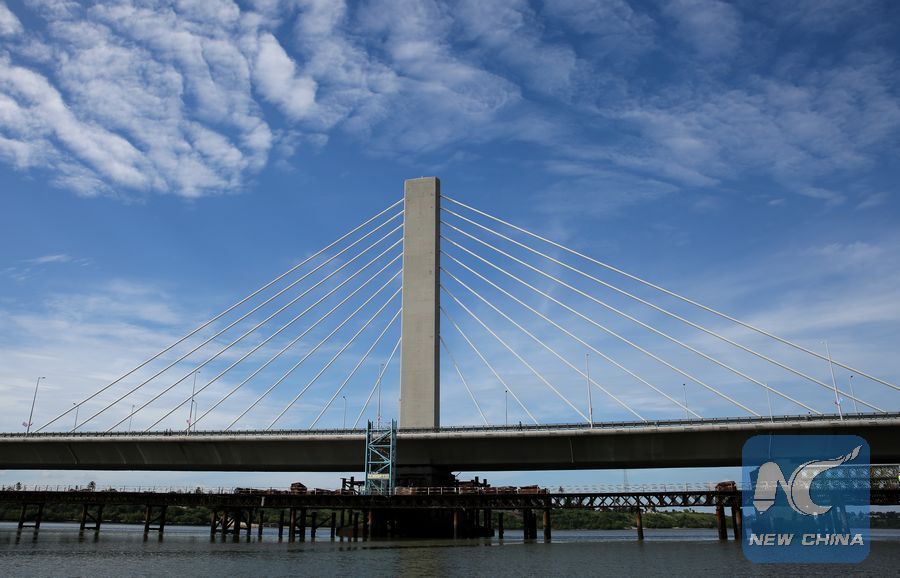
File photo shows a part of the Kigamboni Bridge constructed by a Chinese joint venture is seen in Dar es Salaam, Tanzania, on April 19, 2016. (Xinhua/Pan Siwei)

DAR ES SALAAM, Nov. 29 (Xinhua) -- A senior Tanzanian official on Wednesday described the Chinese-proposed Belt and Road Initiative (BRI) as a vehicle towards the industrialization drive of the east African nation.

"When it comes to the Belt and Road Initiative I see it as a development strategy involving infrastructure development and investments in various areas," said Stella Manyanya, the Deputy Minister of Industry, Trade and Investment.

She said the BRI was striving to improve investments and trade facilitation, removing barriers for the creation of a sound business environment.

Manyanya was speaking at the Conference on Belt and Road Initiative and China-Tanzania Industrialization Cooperation jointly organized by the Chinese embassy in Tanzania and Tanzania's Ministry of Foreign Affairs and East African Cooperation among other partners in Dar es Salaam.

Manyanya said most of the recently completed Chinese construction of buildings, roads, bridges and other projects in Tanzania bore the symbol of Chinese expertise, skills and hard work.

"I trust that, in the process, Tanzanians have gained profoundly in expertise, experience and industrial discipline," she told the one-day conference at the Julius Nyerere International Convention Center.

Humphrey Moshi, the Director of the Center for Chinese Studies at the University of Dar es Salaam, said BRI is a platform for scaling up the cooperation aimed at provision of basic infrastructure, regional development connectivity and industrialization.

The professor of economics said the road to achieving an industrial economy in Tanzania was on track in terms of policies, strategies and measures.

"We are seeing railways being built, roads, ports, airports and human development reforms," said Moshi.

Stephen Bainous Kargbo, the United Nations Industrial Development Organization (UNIDO) Representative to Tanzania, Mauritius and the East African Community (EAC), said the BRI was one key area of cooperation between UNIDO and China, in particular through UNIDO's promotion of cross-border investment among countries participating in the initiative.

"We strongly believe that the Belt and Road Initiative stands to become one of the largest and most effective platforms for international cooperation of the century," he added.

Wang Ke, Chinese Ambassador to Tanzania, said Tanzania as one of Africa's fastest growing economies has also made industrialization an important policy objective.

"Ever since his assuming office, President Magufuli has made industrialization the fundamental approach and the focus of his governance to achieve the vision of becoming a middle-income country by 2025," said Wang.

The Chinese envoy added: "The positive changes that have taken place in Tanzania are visible to us all...and we are confident that with this momentum, the development of industrialization in Tanzania will have broad prospects."

Back to Top Close
Xinhuanet

Belt and Road Initiative is vehicle to Tanzania's industrialization drive: official

Source: Xinhua 2018-11-29 20:57:38

File photo shows a part of the Kigamboni Bridge constructed by a Chinese joint venture is seen in Dar es Salaam, Tanzania, on April 19, 2016. (Xinhua/Pan Siwei)

DAR ES SALAAM, Nov. 29 (Xinhua) -- A senior Tanzanian official on Wednesday described the Chinese-proposed Belt and Road Initiative (BRI) as a vehicle towards the industrialization drive of the east African nation.

"When it comes to the Belt and Road Initiative I see it as a development strategy involving infrastructure development and investments in various areas," said Stella Manyanya, the Deputy Minister of Industry, Trade and Investment.

She said the BRI was striving to improve investments and trade facilitation, removing barriers for the creation of a sound business environment.

Manyanya was speaking at the Conference on Belt and Road Initiative and China-Tanzania Industrialization Cooperation jointly organized by the Chinese embassy in Tanzania and Tanzania's Ministry of Foreign Affairs and East African Cooperation among other partners in Dar es Salaam.

Manyanya said most of the recently completed Chinese construction of buildings, roads, bridges and other projects in Tanzania bore the symbol of Chinese expertise, skills and hard work.

"I trust that, in the process, Tanzanians have gained profoundly in expertise, experience and industrial discipline," she told the one-day conference at the Julius Nyerere International Convention Center.

Humphrey Moshi, the Director of the Center for Chinese Studies at the University of Dar es Salaam, said BRI is a platform for scaling up the cooperation aimed at provision of basic infrastructure, regional development connectivity and industrialization.

The professor of economics said the road to achieving an industrial economy in Tanzania was on track in terms of policies, strategies and measures.

"We are seeing railways being built, roads, ports, airports and human development reforms," said Moshi.

Stephen Bainous Kargbo, the United Nations Industrial Development Organization (UNIDO) Representative to Tanzania, Mauritius and the East African Community (EAC), said the BRI was one key area of cooperation between UNIDO and China, in particular through UNIDO's promotion of cross-border investment among countries participating in the initiative.

"We strongly believe that the Belt and Road Initiative stands to become one of the largest and most effective platforms for international cooperation of the century," he added.

Wang Ke, Chinese Ambassador to Tanzania, said Tanzania as one of Africa's fastest growing economies has also made industrialization an important policy objective.

"Ever since his assuming office, President Magufuli has made industrialization the fundamental approach and the focus of his governance to achieve the vision of becoming a middle-income country by 2025," said Wang.

The Chinese envoy added: "The positive changes that have taken place in Tanzania are visible to us all...and we are confident that with this momentum, the development of industrialization in Tanzania will have broad prospects."

010020070750000000000000011100001376402001