中文字幕网伦射乱中文-超清中文乱码字幕在线观看-亚洲v国产v欧美v久久久久久-久久性网-手机在线成人av-成人六区-国产人与zoxxxx另类一一-青青草国产久久精品-蜜桃av久久久一区二区三区麻豆-成人av一区二区免费播放-在线视频麻豆-www爱爱-成人免费看片视频-性欧美老肥妇喷水-五月99久久婷婷国产综合亚洲-亚洲最色-各种含道具高h调教1v1男男-91丨porny丨国产-国产精品无码专区在线观看不卡-大香伊人

 
Kids more susceptible to robots than adults: study
                 Source: Xinhua | 2018-08-16 06:16:47 | Editor: huaxia

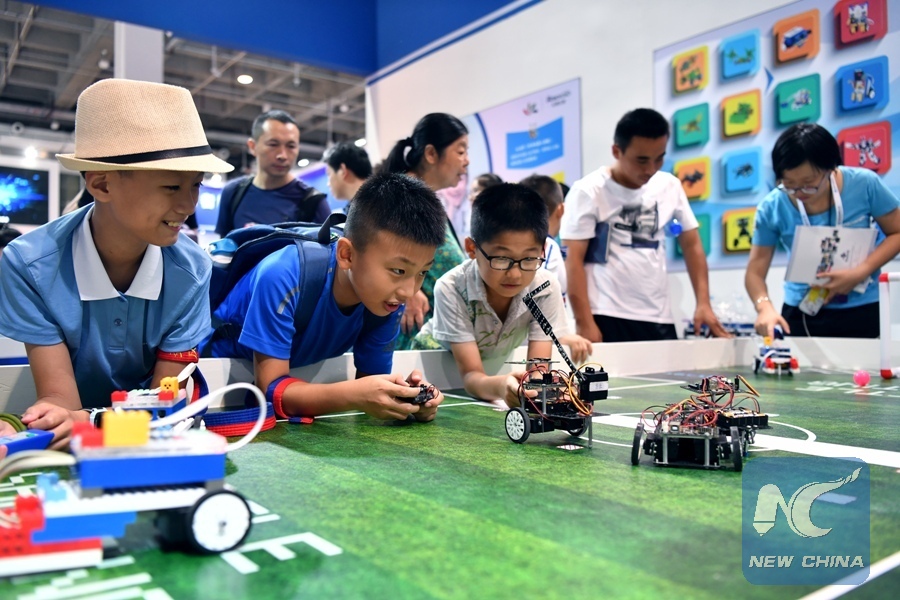
Children look at programming robots at World Robot Conference 2018 in Beijing, capital of China, Aug. 15, 2018. Kicking off on Wednesday, the conference attracted more than 160 domestic and international corporations exhibiting their cutting-edge products in the robotics industry. (Xinhua/Li Xin)

WASHINGTON, Aug. 15 (Xinhua) -- A study published on Wednesday in the journal Science Robotics showed that children were more likely to be influenced by robots compared with adults.

The research conducted at the University of Plymouth compared how adults and children responded to an identical task when in the presence of both their peers and humanoid robots.

It showed that adults regularly had their opinions influenced by peers but they were largely able to resist being persuaded by robots.

However, children aged between seven and nine were more tempting to give the same responses as the robots, even if they were obviously incorrect.

The study used the Asch paradigm, first developed in the 1950s, which asked people to look at a screen showing four lines and decided which two matched in length.

When alone, people almost never made a mistake but when doing the experiment with others, they tend to follow what others were saying.

In the new study, when children were alone in the room, they scored 87 percent on the test, but when the robots join in their score drops to 75 percent.

Among their wrong answers, 74 percent matched those of the robot, according to the study.

"Adults do not conform to what the robots are saying. But when we did the experiment with children, they did. It shows children can perhaps have more of an affinity with robots than adults, which does pose the question: what if robots were to suggest, for example, what products to buy or what to think?" said the study leader Tony Belpaeme, professor in robotics from the University of Plymouth and Ghent University.

Back to Top Close
Xinhuanet

Kids more susceptible to robots than adults: study

Source: Xinhua 2018-08-16 06:16:47

Children look at programming robots at World Robot Conference 2018 in Beijing, capital of China, Aug. 15, 2018. Kicking off on Wednesday, the conference attracted more than 160 domestic and international corporations exhibiting their cutting-edge products in the robotics industry. (Xinhua/Li Xin)

WASHINGTON, Aug. 15 (Xinhua) -- A study published on Wednesday in the journal Science Robotics showed that children were more likely to be influenced by robots compared with adults.

The research conducted at the University of Plymouth compared how adults and children responded to an identical task when in the presence of both their peers and humanoid robots.

It showed that adults regularly had their opinions influenced by peers but they were largely able to resist being persuaded by robots.

However, children aged between seven and nine were more tempting to give the same responses as the robots, even if they were obviously incorrect.

The study used the Asch paradigm, first developed in the 1950s, which asked people to look at a screen showing four lines and decided which two matched in length.

When alone, people almost never made a mistake but when doing the experiment with others, they tend to follow what others were saying.

In the new study, when children were alone in the room, they scored 87 percent on the test, but when the robots join in their score drops to 75 percent.

Among their wrong answers, 74 percent matched those of the robot, according to the study.

"Adults do not conform to what the robots are saying. But when we did the experiment with children, they did. It shows children can perhaps have more of an affinity with robots than adults, which does pose the question: what if robots were to suggest, for example, what products to buy or what to think?" said the study leader Tony Belpaeme, professor in robotics from the University of Plymouth and Ghent University.

010020070750000000000000011100001373934461