中文字幕网伦射乱中文-超清中文乱码字幕在线观看-亚洲v国产v欧美v久久久久久-久久性网-手机在线成人av-成人六区-国产人与zoxxxx另类一一-青青草国产久久精品-蜜桃av久久久一区二区三区麻豆-成人av一区二区免费播放-在线视频麻豆-www爱爱-成人免费看片视频-性欧美老肥妇喷水-五月99久久婷婷国产综合亚洲-亚洲最色-各种含道具高h调教1v1男男-91丨porny丨国产-国产精品无码专区在线观看不卡-大香伊人

 
American researchers transplant bioengineered lungs into pigs without complication
                 Source: Xinhua | 2018-08-02 03:55:22 | Editor: huaxia

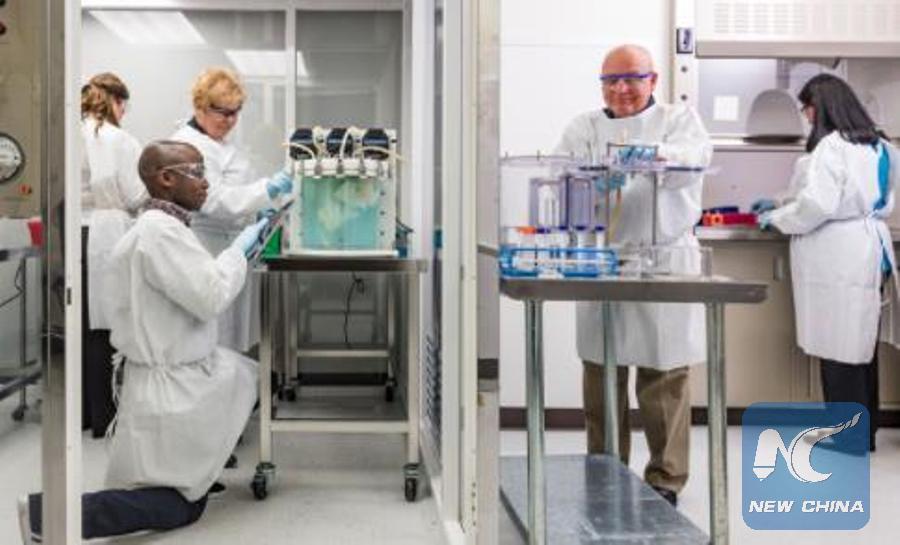
A research team at the University of Texas Medical Branch have bioengineered lungs and transplante them into adult pigs with no medical complication. (Credit: The University of Texas Medical Branch at Galveston)

WASHINGTON, Aug. 1 (Xinhua) -- American scientists reported on Wednesday in the journal Science Translational Medicine that they bioengineered lungs and transplanted them into adult pigs with no medical complication.

Joan Nichols and Joaquin Cortiella from the University of Texas Medical Branch (UTMB) provided details of how they bioengineered human lungs in a lab, first made in 2014, but this time going without complications in the pigs as part of standard preclinical testing.

"Our ultimate goal is to eventually provide new options for many people awaiting a transplant," said Nichols, professor of internal medicine and associate director of the Galveston National Laboratory at UTMB.

According to the study, scientists created a support scaffold using a lung from an unrelated animal that was treated using a special mixture of sugar and detergent to eliminate all cells and blood in the lung, leaving only the scaffolding proteins or skeleton of the lung behind.

The cells used to produce each bioengineered lung came from a single lung removed from each of the study animals.

The lung scaffold was placed into a tank filled with a carefully blended cocktail of nutrients and then the animals' own cells were added to the scaffold following a carefully designed protocol or recipe.

The bioengineered lungs were grown in a bioreactor for 30 days prior to transplantation.

All of the pigs that received a bioengineered lung stayed healthy. As early as two weeks post-transplant, the bioengineered lung had established the strong network of blood vessels needed for the lung to survive.

There was no signs of pulmonary edema, which is usually a sign of the vasculature not being mature enough, according to the researchers.

The study showed that the bioengineered lungs continued to develop post-transplant without any infusions of growth factors, and the body provided all of the building blocks that the new lungs needed.

The researchers said that the focus of the study was to learn how well the bioengineered lung adapted and continued to mature within a large, living body. They didn't evaluate how much the bioengineered lung provided oxygenation to the animal.

The researchers said that with enough funding, they could grow lungs to transplant into people in compassionate use circumstances within five to 10 years.

Back to Top Close
Xinhuanet

American researchers transplant bioengineered lungs into pigs without complication

Source: Xinhua 2018-08-02 03:55:22

A research team at the University of Texas Medical Branch have bioengineered lungs and transplante them into adult pigs with no medical complication. (Credit: The University of Texas Medical Branch at Galveston)

WASHINGTON, Aug. 1 (Xinhua) -- American scientists reported on Wednesday in the journal Science Translational Medicine that they bioengineered lungs and transplanted them into adult pigs with no medical complication.

Joan Nichols and Joaquin Cortiella from the University of Texas Medical Branch (UTMB) provided details of how they bioengineered human lungs in a lab, first made in 2014, but this time going without complications in the pigs as part of standard preclinical testing.

"Our ultimate goal is to eventually provide new options for many people awaiting a transplant," said Nichols, professor of internal medicine and associate director of the Galveston National Laboratory at UTMB.

According to the study, scientists created a support scaffold using a lung from an unrelated animal that was treated using a special mixture of sugar and detergent to eliminate all cells and blood in the lung, leaving only the scaffolding proteins or skeleton of the lung behind.

The cells used to produce each bioengineered lung came from a single lung removed from each of the study animals.

The lung scaffold was placed into a tank filled with a carefully blended cocktail of nutrients and then the animals' own cells were added to the scaffold following a carefully designed protocol or recipe.

The bioengineered lungs were grown in a bioreactor for 30 days prior to transplantation.

All of the pigs that received a bioengineered lung stayed healthy. As early as two weeks post-transplant, the bioengineered lung had established the strong network of blood vessels needed for the lung to survive.

There was no signs of pulmonary edema, which is usually a sign of the vasculature not being mature enough, according to the researchers.

The study showed that the bioengineered lungs continued to develop post-transplant without any infusions of growth factors, and the body provided all of the building blocks that the new lungs needed.

The researchers said that the focus of the study was to learn how well the bioengineered lung adapted and continued to mature within a large, living body. They didn't evaluate how much the bioengineered lung provided oxygenation to the animal.

The researchers said that with enough funding, they could grow lungs to transplant into people in compassionate use circumstances within five to 10 years.

010020070750000000000000011100001373623151