中文字幕网伦射乱中文-超清中文乱码字幕在线观看-亚洲v国产v欧美v久久久久久-久久性网-手机在线成人av-成人六区-国产人与zoxxxx另类一一-青青草国产久久精品-蜜桃av久久久一区二区三区麻豆-成人av一区二区免费播放-在线视频麻豆-www爱爱-成人免费看片视频-性欧美老肥妇喷水-五月99久久婷婷国产综合亚洲-亚洲最色-各种含道具高h调教1v1男男-91丨porny丨国产-国产精品无码专区在线观看不卡-大香伊人

 
Interview: Climate-related natural disasters threaten livelihoods of Mongolian nomadic herders: UN official
                 Source: Xinhua | 2018-07-08 03:05:21 | Editor: huaxia

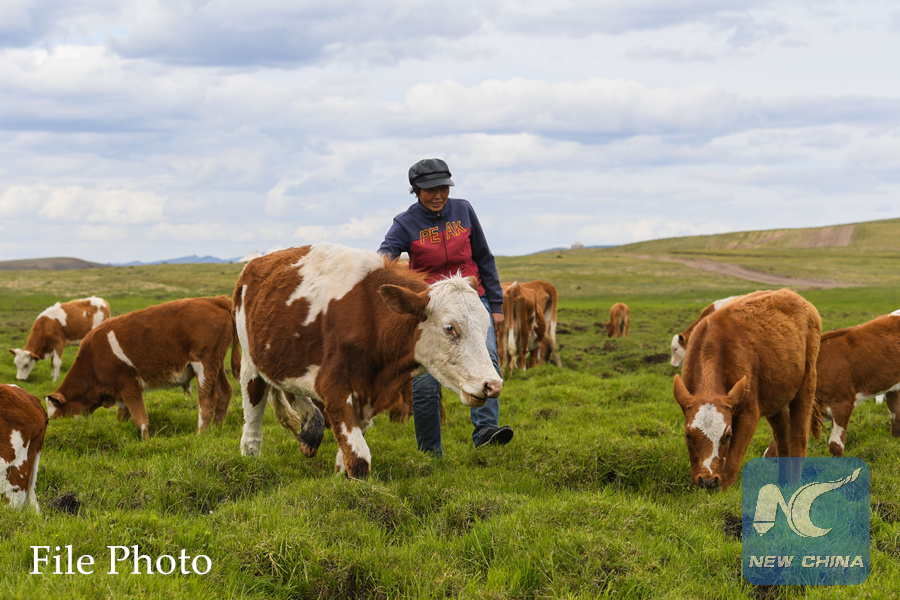
Aodunhu, Erden's wife, herds cattle at the summer pasture at the Ar Horqin Banner in Chifeng City, north China's Inner Mongolia Autonomous Region, June 5, 2018. (Xinhua/Peng Yuan)

ULAN BATOR, July 7 (Xinhua) -- Global warming is increasing the risk of natural disasters, including droughts and the extreme wintry weather known as "dzud" in Mongolia, and is threatening the livelihoods of thousands of Mongolian nomadic herders, a United Nations (UN) official has said.

"There is a direct impact of the global warming on the frequency of drought and dzud," Kundhavi Kadiresan, assistant director-general of the UN's Food and Agricultural Organization (FAO), said in a recent interview with Xinhua.

"On the other hand, the rising frequency is highly related to human activity. Indeed, Mongolian nomadic herders are among the primary victims of natural disasters," added Kadiresan, also the FAO's regional representative for Asia and the Pacific.

The average temperature in Mongolia has risen 2.10 degrees Celsius since 1940, more than doubling the rise of average global temperatures, according to the UN Environment Programme.

Kadiresan warned that it is important to remember that disasters and climate change impact people disproportionately, and that the herders who don't have the capacity to diversify their sources of income would be hardest hit.

Animal husbandry is the backbone of the landlocked country's economy as nearly 40 percent of the country's nomad population depends on animal husbandry for their livelihoods.

The dzud that occurred in the winters of 1999 and 2000 caused the loss 30 percent of animals in Mongolia. In 2009, it was reported that two million heads of livestock, or 20 percent of the country's total, died.

The good thing is that the animal losses had not been at a disastrous level, due to the Mongolian government's intervention to improve preparedness for the dzuds, Kadiresan said.

Yet, the situation remains alarming, as 40 percent of Mongolian territory is experiencing one of the worst droughts in history, especially the provinces covered by the gobi desert, according to the Mongolian National Agency for Meteorology and Environmental Monitoring.

Usually, if there is a summer drought, then there will be a dzud the following winter. Herders are afraid that there will be a dzud this coming winter.

"Reducing disaster risks requires actions by many actors, not just the government," Kadiresan said, stressing the importance of cooperation between government agencies and the herders. She added that the key factor is good preparedness.

Back to Top Close
Xinhuanet

Interview: Climate-related natural disasters threaten livelihoods of Mongolian nomadic herders: UN official

Source: Xinhua 2018-07-08 03:05:21

Aodunhu, Erden's wife, herds cattle at the summer pasture at the Ar Horqin Banner in Chifeng City, north China's Inner Mongolia Autonomous Region, June 5, 2018. (Xinhua/Peng Yuan)

ULAN BATOR, July 7 (Xinhua) -- Global warming is increasing the risk of natural disasters, including droughts and the extreme wintry weather known as "dzud" in Mongolia, and is threatening the livelihoods of thousands of Mongolian nomadic herders, a United Nations (UN) official has said.

"There is a direct impact of the global warming on the frequency of drought and dzud," Kundhavi Kadiresan, assistant director-general of the UN's Food and Agricultural Organization (FAO), said in a recent interview with Xinhua.

"On the other hand, the rising frequency is highly related to human activity. Indeed, Mongolian nomadic herders are among the primary victims of natural disasters," added Kadiresan, also the FAO's regional representative for Asia and the Pacific.

The average temperature in Mongolia has risen 2.10 degrees Celsius since 1940, more than doubling the rise of average global temperatures, according to the UN Environment Programme.

Kadiresan warned that it is important to remember that disasters and climate change impact people disproportionately, and that the herders who don't have the capacity to diversify their sources of income would be hardest hit.

Animal husbandry is the backbone of the landlocked country's economy as nearly 40 percent of the country's nomad population depends on animal husbandry for their livelihoods.

The dzud that occurred in the winters of 1999 and 2000 caused the loss 30 percent of animals in Mongolia. In 2009, it was reported that two million heads of livestock, or 20 percent of the country's total, died.

The good thing is that the animal losses had not been at a disastrous level, due to the Mongolian government's intervention to improve preparedness for the dzuds, Kadiresan said.

Yet, the situation remains alarming, as 40 percent of Mongolian territory is experiencing one of the worst droughts in history, especially the provinces covered by the gobi desert, according to the Mongolian National Agency for Meteorology and Environmental Monitoring.

Usually, if there is a summer drought, then there will be a dzud the following winter. Herders are afraid that there will be a dzud this coming winter.

"Reducing disaster risks requires actions by many actors, not just the government," Kadiresan said, stressing the importance of cooperation between government agencies and the herders. She added that the key factor is good preparedness.

010020070750000000000000011100001373090121