中文字幕网伦射乱中文-超清中文乱码字幕在线观看-亚洲v国产v欧美v久久久久久-久久性网-手机在线成人av-成人六区-国产人与zoxxxx另类一一-青青草国产久久精品-蜜桃av久久久一区二区三区麻豆-成人av一区二区免费播放-在线视频麻豆-www爱爱-成人免费看片视频-性欧美老肥妇喷水-五月99久久婷婷国产综合亚洲-亚洲最色-各种含道具高h调教1v1男男-91丨porny丨国产-国产精品无码专区在线观看不卡-大香伊人

 
More species formed in cold ocean waters instead of warm coral reefs: study
                 Source: Xinhua | 2018-07-05 02:02:52 | Editor: huaxia

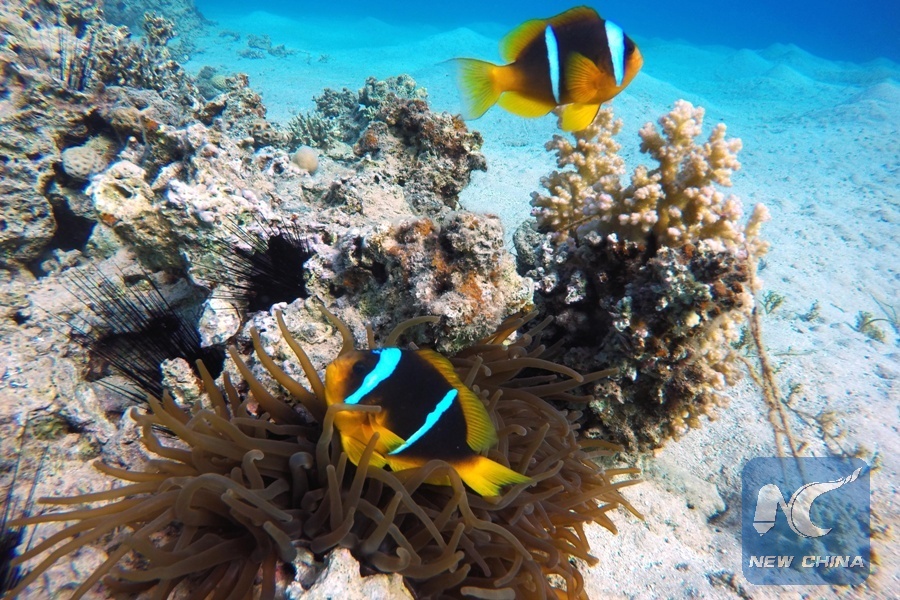
Fish swim among coral reefs in the waters of Red Sea near the resort town of Ras Shaytan, south Sinai, Egypt, Jan. 14, 2016. (Xinhua/Ahmed Gomaa)

WASHINGTON, July 4 (Xinhua) -- A new study published on Wednesday in the journal Nature showed that the fastest rates of species formation have occurred at the highest latitudes and in the coldest ocean waters, instead of the balmy coral reefs.

An international team of researchers who analyzed the evolutionary relationships between more than 30,000 fish species revealed that over the past several million years, cool-water and polar ocean fishes formed new species twice as fast as the average species of tropical fish.

"These findings are both surprising and paradoxical," said Daniel Rabosky, an evolutionary biologist from University of Michigan and the lead author of the study.

"A number of hypotheses explain extreme tropical diversity as the result of faster rates of species formation, but it's never been tested in fishes," said Rabosky.

"Our results are counter-intuitive and unexpected, because we find that speciation is actually fastest in the geographic regions with the lowest species richness."

The findings are incompatible with the idea that the tropics serve as an evolutionary cradle for marine fish diversity, and also raise questions about whether the rapid cold-ocean speciation reflects a recent and ongoing expansion of marine diversity there.

A high rate of new species formation may eventually lead to impressive levels of biodiversity, but that depends on how many of the newly formed species survive and how many go extinct.

"The number of species you find in a region is largely a balance between the rate at which new species form and the rate at which extinction eliminates them," said Rabosky.

"Extinction is the missing piece of this puzzle, but it's the most difficult thing to understand. We're now using both fossils and new statistical tools to try to get a handle on what extinction might have been doing in both the polar regions and the tropics," said Rabosky.

In the study, Rabosky and colleagues from eight institutions assembled a time-calibrated evolutionary tree of all 31,526 ray-finned fish species, then focused their analysis on marine species worldwide.

They found that some of the fastest rates of new species formation occurred in Antarctic icefish and their relatives.

Other temperate and polar groups with exceptionally high speciation rates include snailfish, eelpouts and rockfish, according to the study.

Three of the largest coral reef-associated fish groups, namely wrasses, damselfish and gobies, showed low to moderate rates of species formation.

Back to Top Close
Xinhuanet

More species formed in cold ocean waters instead of warm coral reefs: study

Source: Xinhua 2018-07-05 02:02:52

Fish swim among coral reefs in the waters of Red Sea near the resort town of Ras Shaytan, south Sinai, Egypt, Jan. 14, 2016. (Xinhua/Ahmed Gomaa)

WASHINGTON, July 4 (Xinhua) -- A new study published on Wednesday in the journal Nature showed that the fastest rates of species formation have occurred at the highest latitudes and in the coldest ocean waters, instead of the balmy coral reefs.

An international team of researchers who analyzed the evolutionary relationships between more than 30,000 fish species revealed that over the past several million years, cool-water and polar ocean fishes formed new species twice as fast as the average species of tropical fish.

"These findings are both surprising and paradoxical," said Daniel Rabosky, an evolutionary biologist from University of Michigan and the lead author of the study.

"A number of hypotheses explain extreme tropical diversity as the result of faster rates of species formation, but it's never been tested in fishes," said Rabosky.

"Our results are counter-intuitive and unexpected, because we find that speciation is actually fastest in the geographic regions with the lowest species richness."

The findings are incompatible with the idea that the tropics serve as an evolutionary cradle for marine fish diversity, and also raise questions about whether the rapid cold-ocean speciation reflects a recent and ongoing expansion of marine diversity there.

A high rate of new species formation may eventually lead to impressive levels of biodiversity, but that depends on how many of the newly formed species survive and how many go extinct.

"The number of species you find in a region is largely a balance between the rate at which new species form and the rate at which extinction eliminates them," said Rabosky.

"Extinction is the missing piece of this puzzle, but it's the most difficult thing to understand. We're now using both fossils and new statistical tools to try to get a handle on what extinction might have been doing in both the polar regions and the tropics," said Rabosky.

In the study, Rabosky and colleagues from eight institutions assembled a time-calibrated evolutionary tree of all 31,526 ray-finned fish species, then focused their analysis on marine species worldwide.

They found that some of the fastest rates of new species formation occurred in Antarctic icefish and their relatives.

Other temperate and polar groups with exceptionally high speciation rates include snailfish, eelpouts and rockfish, according to the study.

Three of the largest coral reef-associated fish groups, namely wrasses, damselfish and gobies, showed low to moderate rates of species formation.

010020070750000000000000011100001373018401