中文字幕网伦射乱中文-超清中文乱码字幕在线观看-亚洲v国产v欧美v久久久久久-久久性网-手机在线成人av-成人六区-国产人与zoxxxx另类一一-青青草国产久久精品-蜜桃av久久久一区二区三区麻豆-成人av一区二区免费播放-在线视频麻豆-www爱爱-成人免费看片视频-性欧美老肥妇喷水-五月99久久婷婷国产综合亚洲-亚洲最色-各种含道具高h调教1v1男男-91丨porny丨国产-国产精品无码专区在线观看不卡-大香伊人

 
Unique sugar composition in mother's breastmilk may reduce infant's allergy risks: study
                 Source: Xinhua | 2018-06-13 03:26:53 | Editor: huaxia

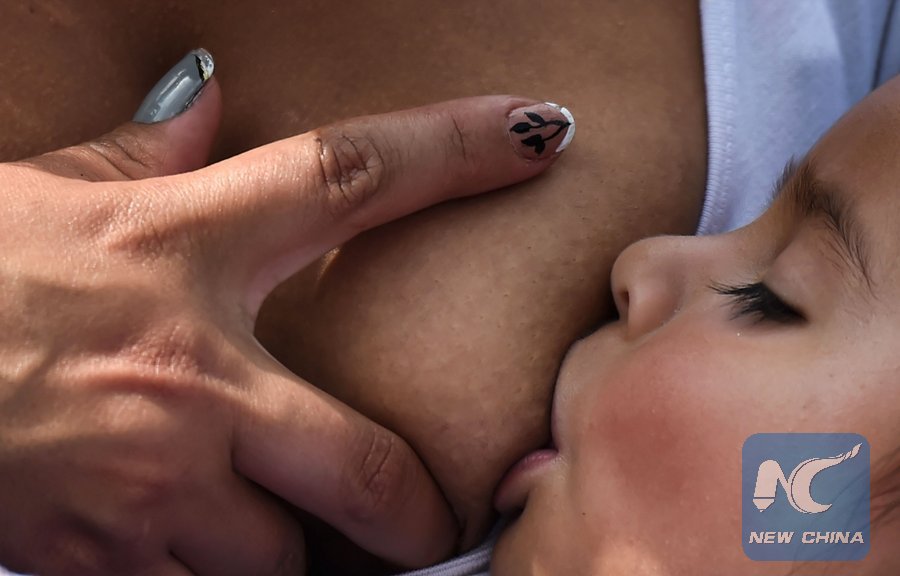
A woman breastfeeds her baby during a public event to promote the benefits of breastfeeding at a park in Bogota on Nov. 3, 2017. (Xinhua/AFP)

WASHINGTON, June 12 (Xinhua) -- The unique composition of sugars in a mother's breastmilk may prevent food allergies in her infant, according to a study published in the latest issue of Allergy.

The study highlighted the health role of human milk oligosaccharides (HMOs), which are not found in infant formula, suggesting a potential for therapeutic interventions.

HMOs are structurally complicated sugar molecules unique to human breast milk, and the third most abundant solid component in human milk after lactose, a different type of sugar, and fat.

They are not actually digestible by infants, but could help guide development of the infant gut microbiota, which previous research suggests is a key influencer of allergic disease.

Previous studies have shown that breastfed infants have a lower risk for a variety of medical conditions, such as wheezing, infections, asthma and obesity.

Researchers at the University of California (UC), San Diego School of Medicine and their colleagues in Canada analyzed breastmilk samples taken three-to-four months after birth from 421 infants and mothers.

Then, at one year of age, infants were given skin prick tests to check for allergic sensitization to common allergens, including certain foods.

The team found that 59 of 421 infants (14 percent) displayed sensitization to one or more food allergens at age one.

"Our research has identified a 'beneficial' HMO profile that was associated with a lower rate of food sensitization in children at one year," said Lars Bode, associate professor of pediatrics at UC San Diego School of Medicine, who led the study.

No individual HMO was associated with food sensitization, but the overall HMO composition appeared to play a role, according to the study.

Composition of HMOs in breast milk is variable and determined by factors like lactation stage, gestational age, maternal health, ethnicity, geographic location and breastfeeding exclusivity.

"A positive test is not necessarily proof of an allergy, but does indicate a heightened sensitivity," said Meghan Azad, a Canada Research Chair in Developmental Origins of Chronic Disease.

"Sensitizations during infancy don't always persist into later childhood, but they are important clinical indicators and strong predictors of future allergic disease," said Azad.

Back to Top Close
Xinhuanet

Unique sugar composition in mother's breastmilk may reduce infant's allergy risks: study

Source: Xinhua 2018-06-13 03:26:53

A woman breastfeeds her baby during a public event to promote the benefits of breastfeeding at a park in Bogota on Nov. 3, 2017. (Xinhua/AFP)

WASHINGTON, June 12 (Xinhua) -- The unique composition of sugars in a mother's breastmilk may prevent food allergies in her infant, according to a study published in the latest issue of Allergy.

The study highlighted the health role of human milk oligosaccharides (HMOs), which are not found in infant formula, suggesting a potential for therapeutic interventions.

HMOs are structurally complicated sugar molecules unique to human breast milk, and the third most abundant solid component in human milk after lactose, a different type of sugar, and fat.

They are not actually digestible by infants, but could help guide development of the infant gut microbiota, which previous research suggests is a key influencer of allergic disease.

Previous studies have shown that breastfed infants have a lower risk for a variety of medical conditions, such as wheezing, infections, asthma and obesity.

Researchers at the University of California (UC), San Diego School of Medicine and their colleagues in Canada analyzed breastmilk samples taken three-to-four months after birth from 421 infants and mothers.

Then, at one year of age, infants were given skin prick tests to check for allergic sensitization to common allergens, including certain foods.

The team found that 59 of 421 infants (14 percent) displayed sensitization to one or more food allergens at age one.

"Our research has identified a 'beneficial' HMO profile that was associated with a lower rate of food sensitization in children at one year," said Lars Bode, associate professor of pediatrics at UC San Diego School of Medicine, who led the study.

No individual HMO was associated with food sensitization, but the overall HMO composition appeared to play a role, according to the study.

Composition of HMOs in breast milk is variable and determined by factors like lactation stage, gestational age, maternal health, ethnicity, geographic location and breastfeeding exclusivity.

"A positive test is not necessarily proof of an allergy, but does indicate a heightened sensitivity," said Meghan Azad, a Canada Research Chair in Developmental Origins of Chronic Disease.

"Sensitizations during infancy don't always persist into later childhood, but they are important clinical indicators and strong predictors of future allergic disease," said Azad.

010020070750000000000000011105091372497251