中文字幕网伦射乱中文-超清中文乱码字幕在线观看-亚洲v国产v欧美v久久久久久-久久性网-手机在线成人av-成人六区-国产人与zoxxxx另类一一-青青草国产久久精品-蜜桃av久久久一区二区三区麻豆-成人av一区二区免费播放-在线视频麻豆-www爱爱-成人免费看片视频-性欧美老肥妇喷水-五月99久久婷婷国产综合亚洲-亚洲最色-各种含道具高h调教1v1男男-91丨porny丨国产-国产精品无码专区在线观看不卡-大香伊人

 
New mission to Mars begins with NASA's InSight launched in space
                 Source: Xinhua | 2018-05-06 00:15:14 | Editor: huaxia

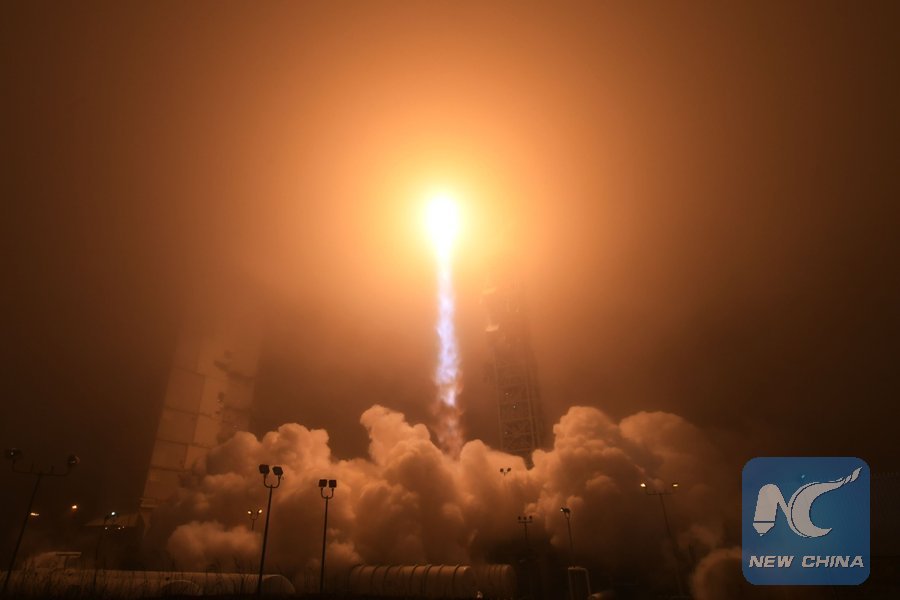
The NASA InSight spacecraft launches onboard a United Launch Alliance Atlas-V rocket on May 5, 2018, from Vandenberg Air Force Base in California. (Xinhua/AFP)

LOMPOC, the United States, May 5 (Xinhua) -- The U.S. National Aeronautics and Space Administration (NASA) sent off InSight, its robotic lander, from the central coast of California at pre-dawn on Saturday to explore the deep interior of the red planet.

The lander blasted off at 4:05 a.m. local time (1105 GMT) atop an Atlas V rocket from the Vandenberg Air Force Base.

"Mars, here I come! 6 months and counting to the Red Planet," the mission team tweeted.

InSight, short for Interior Exploration using Seismic Investigations, Geodesy and Heat Transport, will study how rocky planets and their moons were formed.

"I am so excited! This is my first time watching a rocket launch on the West Coast," said Jennifer Ma, who drove here from San Diego on Friday to view the launch.

"Most of the hotel rooms in town sold out weeks ago. I had to stay in the car, waiting for the launch," she told Xinhua.

Missions to other planets are normally launched from NASA's Kennedy Space Center and fly east, over water. That's because the eastward direction adds the momentum of Earth's eastward rotation to the launch vehicle's own thrust.

But the Atlas V is powerful enough to fly south toward the sea from the Vandenberg Air Force Base. Besides, the air force base had greater availability to accommodate InSight's five-week launch window.

The launch is only the beginning. The trip to Mars takes about six months. The journey is about 485 million kilometers.

InSight will land on Mars on Nov. 26, around noon Pacific Standard Time, on the Elysium Planitia, a volcanic region located in Mars' northern hemisphere, according to NASA.

Unlike NASA's previous Mars rovers such as Opportunity, Spirit and Curiosity, the lander will be a stationary mission. Staying in one place is necessary for its goals.

In addition, NASA's Jet Propulsion Laboratory will use the spacecraft communication system to provide precise measurements of planetary rotation.

The mission is also sending CubeSats, miniature satellites for space research, beyond Earth for the first time.

Atlas V, operated by United Launch Alliance, a joint venture of Boeing and Lockheed Martin Space, is one of the biggest rockets available for interplanetary flight. This is the same type of rocket that launched the Mars Reconnaissance Orbiter in 2005.

Back to Top Close
Xinhuanet

New mission to Mars begins with NASA's InSight launched in space

Source: Xinhua 2018-05-06 00:15:14

The NASA InSight spacecraft launches onboard a United Launch Alliance Atlas-V rocket on May 5, 2018, from Vandenberg Air Force Base in California. (Xinhua/AFP)

LOMPOC, the United States, May 5 (Xinhua) -- The U.S. National Aeronautics and Space Administration (NASA) sent off InSight, its robotic lander, from the central coast of California at pre-dawn on Saturday to explore the deep interior of the red planet.

The lander blasted off at 4:05 a.m. local time (1105 GMT) atop an Atlas V rocket from the Vandenberg Air Force Base.

"Mars, here I come! 6 months and counting to the Red Planet," the mission team tweeted.

InSight, short for Interior Exploration using Seismic Investigations, Geodesy and Heat Transport, will study how rocky planets and their moons were formed.

"I am so excited! This is my first time watching a rocket launch on the West Coast," said Jennifer Ma, who drove here from San Diego on Friday to view the launch.

"Most of the hotel rooms in town sold out weeks ago. I had to stay in the car, waiting for the launch," she told Xinhua.

Missions to other planets are normally launched from NASA's Kennedy Space Center and fly east, over water. That's because the eastward direction adds the momentum of Earth's eastward rotation to the launch vehicle's own thrust.

But the Atlas V is powerful enough to fly south toward the sea from the Vandenberg Air Force Base. Besides, the air force base had greater availability to accommodate InSight's five-week launch window.

The launch is only the beginning. The trip to Mars takes about six months. The journey is about 485 million kilometers.

InSight will land on Mars on Nov. 26, around noon Pacific Standard Time, on the Elysium Planitia, a volcanic region located in Mars' northern hemisphere, according to NASA.

Unlike NASA's previous Mars rovers such as Opportunity, Spirit and Curiosity, the lander will be a stationary mission. Staying in one place is necessary for its goals.

In addition, NASA's Jet Propulsion Laboratory will use the spacecraft communication system to provide precise measurements of planetary rotation.

The mission is also sending CubeSats, miniature satellites for space research, beyond Earth for the first time.

Atlas V, operated by United Launch Alliance, a joint venture of Boeing and Lockheed Martin Space, is one of the biggest rockets available for interplanetary flight. This is the same type of rocket that launched the Mars Reconnaissance Orbiter in 2005.

010020070750000000000000011105091371584401