中文字幕网伦射乱中文-超清中文乱码字幕在线观看-亚洲v国产v欧美v久久久久久-久久性网-手机在线成人av-成人六区-国产人与zoxxxx另类一一-青青草国产久久精品-蜜桃av久久久一区二区三区麻豆-成人av一区二区免费播放-在线视频麻豆-www爱爱-成人免费看片视频-性欧美老肥妇喷水-五月99久久婷婷国产综合亚洲-亚洲最色-各种含道具高h调教1v1男男-91丨porny丨国产-国产精品无码专区在线观看不卡-大香伊人

 
South Sudan to cut hiked work permit fee after outcry
                 Source: Xinhua | 2018-02-27 21:49:25 | Editor: huaxia

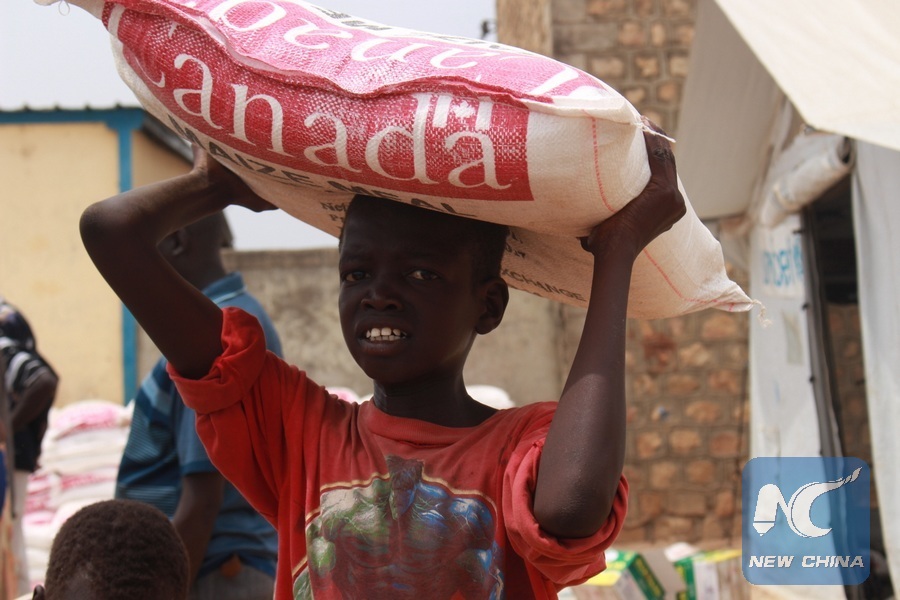
File photo shows an Internally Displaced Person (IDP) carry a sack of maize flour donated by humanitarian organizations at Mahad Camp in central Juba, South Sudan, March 9, 2017. (Xinhua/Gale Julius)

JUBA, Feb. 27 (Xinhua) -- Annual work permit fees for foreigners working in South Sudan will be reduced by 50 percent, the country's labor ministry said on Tuesday.

Gathoth Gatkuoth, Labor and Public Service Minister, told a news conference that government was prompted to review the work permit fee after an outcry from humanitarian agencies and the public.

In March 2017, South Sudan increased work permit fees for foreign workers from 100 to 10,000 dollars as a measure to fight economic crisis.

The Finance Ministry said at the time that the hiked fee would rise vital revenue for the cash strapped government to fund its activities.

But the increment prompted an outcry from humanitarian agencies who described it as way of restricting work of foreign aid workers in the war-torn nation, forcing the government to suspend the policy the following month.

In November 2017, the Labor Ministry announced revised work permit fees of 4,000 dollars for consultants and managers, professionals were charged 3,000 dollars, while technicians and casual workers will pay 2,000 and 1,000 respectively.

Gatkuoth said that under the new policy, all categories of the work permit fee will be halved, adding that the changes will be effected once the proposal is approved by the cabinet.

"We have realized there is a lot of alarm. There is economic pressure; there is political pressure. So we are reviewing it. I have already tabled before the council of ministers the reduction of work permits by 50 percent of every category," Gatkuoth said.

South Sudan depends on oil revenue for 98 percent of its budget, but civil war has distracted production since 2013, forcing most oilfields in the country's northern Upper Nile region to shut down as production fell to below 130,000 barrels per day (bpd) from 350,000 bpd.

The low oil output has also caused severe shortage of foreign reserves and hyperinflation in the import-dependent country.

?
Back to Top Close
Xinhuanet

South Sudan to cut hiked work permit fee after outcry

Source: Xinhua 2018-02-27 21:49:25

File photo shows an Internally Displaced Person (IDP) carry a sack of maize flour donated by humanitarian organizations at Mahad Camp in central Juba, South Sudan, March 9, 2017. (Xinhua/Gale Julius)

JUBA, Feb. 27 (Xinhua) -- Annual work permit fees for foreigners working in South Sudan will be reduced by 50 percent, the country's labor ministry said on Tuesday.

Gathoth Gatkuoth, Labor and Public Service Minister, told a news conference that government was prompted to review the work permit fee after an outcry from humanitarian agencies and the public.

In March 2017, South Sudan increased work permit fees for foreign workers from 100 to 10,000 dollars as a measure to fight economic crisis.

The Finance Ministry said at the time that the hiked fee would rise vital revenue for the cash strapped government to fund its activities.

But the increment prompted an outcry from humanitarian agencies who described it as way of restricting work of foreign aid workers in the war-torn nation, forcing the government to suspend the policy the following month.

In November 2017, the Labor Ministry announced revised work permit fees of 4,000 dollars for consultants and managers, professionals were charged 3,000 dollars, while technicians and casual workers will pay 2,000 and 1,000 respectively.

Gatkuoth said that under the new policy, all categories of the work permit fee will be halved, adding that the changes will be effected once the proposal is approved by the cabinet.

"We have realized there is a lot of alarm. There is economic pressure; there is political pressure. So we are reviewing it. I have already tabled before the council of ministers the reduction of work permits by 50 percent of every category," Gatkuoth said.

South Sudan depends on oil revenue for 98 percent of its budget, but civil war has distracted production since 2013, forcing most oilfields in the country's northern Upper Nile region to shut down as production fell to below 130,000 barrels per day (bpd) from 350,000 bpd.

The low oil output has also caused severe shortage of foreign reserves and hyperinflation in the import-dependent country.

?
010020070750000000000000011100001370039651