中文字幕网伦射乱中文-超清中文乱码字幕在线观看-亚洲v国产v欧美v久久久久久-久久性网-手机在线成人av-成人六区-国产人与zoxxxx另类一一-青青草国产久久精品-蜜桃av久久久一区二区三区麻豆-成人av一区二区免费播放-在线视频麻豆-www爱爱-成人免费看片视频-性欧美老肥妇喷水-五月99久久婷婷国产综合亚洲-亚洲最色-各种含道具高h调教1v1男男-91丨porny丨国产-国产精品无码专区在线观看不卡-大香伊人

 
Commentary: Multilateralism, cooperation the only way for sustainable security
                 Source: Xinhua | 2018-02-18 03:35:55 | Editor: huaxia

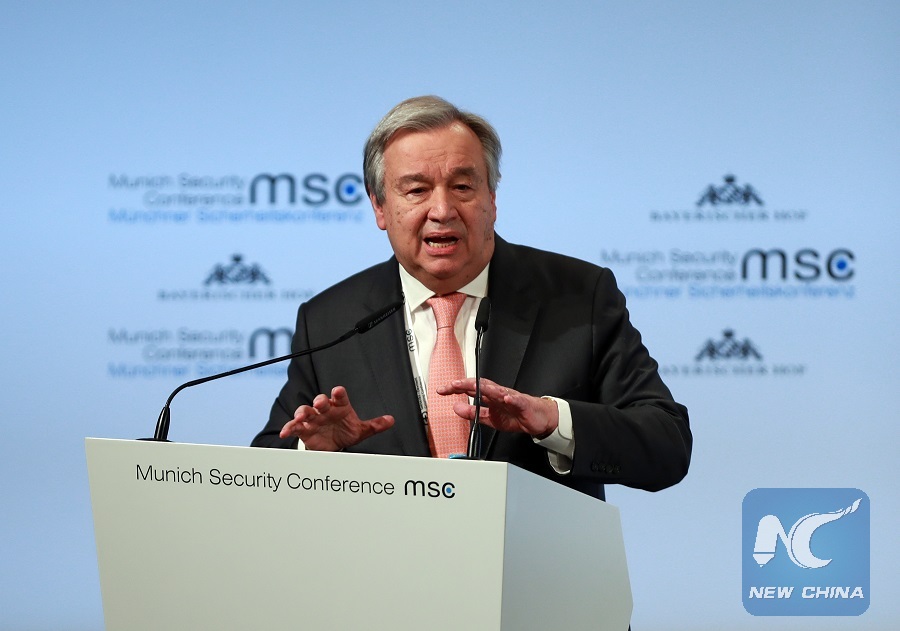
UN Secretary-General Antonio Guterres speaks during the 54th Munich Security Conference (MSC) in Munich, Germany, Feb. 16, 2018.(Xinhua/Luo Huanhuan)

MUNICH, Germany, Feb. 17 (Xinhua) -- As state leaders, officials and experts are discussing the world's major political issues at the ongoing Munich Security Conference (MSC), it is of great importance to stress the role of multilateralism in addressing security issues.

The world is facing security challenges like geopolitical conflicts, as well as terrorism which has been defeated but far from being eliminated. After almost three decades of the end of the Cold War, the world is again facing the risk of nuclear proliferation.

And an array of new patterns of security challenges have emerged. Cyberspace security has become a hot issue as the world is all networked and thus vulnerable to increasing cyber attacks. U.S. withdrawal from the Paris agreement would hamper efforts to tackle climate change.

As MSC Chairman Wolfgang Ischinger said at the opening address on Friday, the world is much closer to the brink of inter-state conflicts.

And in the meantime, the international system has been impacted by the return of populism and unilateralism.

History has proved for many times that the unilateral approach with a zero-sum mind could only lead to raising tensions and conflicts, making displacement of people and building hotbeds for terrorism and more conflicts.

On the other hand, unilateralism and intervention have also made some western countries suffer from terrorist attacks and the huge impacts of refugee inflows.

In a highly globalized and interconnected world, no one is an island, and no issues can be addressed by a single country. In a world with highly intertwined interests, regional conflicts are more likely to spill over and affect the neighboring regions and the world as a whole. Look at the anti-terrorist war in the Middle East and the refugee crisis in Europe.

Therefore, short-sighted unilateralism is not only unsustainable but also threatening the security of the world.

Long-term international security cannot be achieved by treating only the symptoms. Security is no longer only in military or political categories, but also involved in development and environment.

As German Defense Minister Ursula von der Leyen said at the opening speech, Europe achieved long-term peace after the WWII with not only the security efforts led by NATO, but also development.

It is the same that development is of great significance in war-torn Middle East, in poverty-stricken African states, as well as in areas with potential conflicts.

Only communication and cooperation in multilateral ways can lead to prolonged peace and stability, as well as the inclusive development benefiting all countries and all groups of people.

"Multilateralism is today more necessary than ever," UN Secretary-General Antonio Guterres told MSC participants, calling for building a true and strong multilateralism to address the challenges of present times, against the backdrop that the global security threats and conflicts have become more and more inter-related.

China is always a multi-player. In coincidence with the rise of its strength, China is walking from the periphery into the center stage of the world, and acting no longer as a bystander but an involver, by strengthening the existing multilateral frameworks, such as the UN, the G20, and others.

The MSC is a great platform for forging such multilateral approach for world issues, but we should do more in practical actions rather than lip service. The more the practical solutions in multilateral efforts, the more peace and stability can the world achieve.

Back to Top Close
Xinhuanet

Commentary: Multilateralism, cooperation the only way for sustainable security

Source: Xinhua 2018-02-18 03:35:55

UN Secretary-General Antonio Guterres speaks during the 54th Munich Security Conference (MSC) in Munich, Germany, Feb. 16, 2018.(Xinhua/Luo Huanhuan)

MUNICH, Germany, Feb. 17 (Xinhua) -- As state leaders, officials and experts are discussing the world's major political issues at the ongoing Munich Security Conference (MSC), it is of great importance to stress the role of multilateralism in addressing security issues.

The world is facing security challenges like geopolitical conflicts, as well as terrorism which has been defeated but far from being eliminated. After almost three decades of the end of the Cold War, the world is again facing the risk of nuclear proliferation.

And an array of new patterns of security challenges have emerged. Cyberspace security has become a hot issue as the world is all networked and thus vulnerable to increasing cyber attacks. U.S. withdrawal from the Paris agreement would hamper efforts to tackle climate change.

As MSC Chairman Wolfgang Ischinger said at the opening address on Friday, the world is much closer to the brink of inter-state conflicts.

And in the meantime, the international system has been impacted by the return of populism and unilateralism.

History has proved for many times that the unilateral approach with a zero-sum mind could only lead to raising tensions and conflicts, making displacement of people and building hotbeds for terrorism and more conflicts.

On the other hand, unilateralism and intervention have also made some western countries suffer from terrorist attacks and the huge impacts of refugee inflows.

In a highly globalized and interconnected world, no one is an island, and no issues can be addressed by a single country. In a world with highly intertwined interests, regional conflicts are more likely to spill over and affect the neighboring regions and the world as a whole. Look at the anti-terrorist war in the Middle East and the refugee crisis in Europe.

Therefore, short-sighted unilateralism is not only unsustainable but also threatening the security of the world.

Long-term international security cannot be achieved by treating only the symptoms. Security is no longer only in military or political categories, but also involved in development and environment.

As German Defense Minister Ursula von der Leyen said at the opening speech, Europe achieved long-term peace after the WWII with not only the security efforts led by NATO, but also development.

It is the same that development is of great significance in war-torn Middle East, in poverty-stricken African states, as well as in areas with potential conflicts.

Only communication and cooperation in multilateral ways can lead to prolonged peace and stability, as well as the inclusive development benefiting all countries and all groups of people.

"Multilateralism is today more necessary than ever," UN Secretary-General Antonio Guterres told MSC participants, calling for building a true and strong multilateralism to address the challenges of present times, against the backdrop that the global security threats and conflicts have become more and more inter-related.

China is always a multi-player. In coincidence with the rise of its strength, China is walking from the periphery into the center stage of the world, and acting no longer as a bystander but an involver, by strengthening the existing multilateral frameworks, such as the UN, the G20, and others.

The MSC is a great platform for forging such multilateral approach for world issues, but we should do more in practical actions rather than lip service. The more the practical solutions in multilateral efforts, the more peace and stability can the world achieve.

010020070750000000000000011105521369823041