中文字幕网伦射乱中文-超清中文乱码字幕在线观看-亚洲v国产v欧美v久久久久久-久久性网-手机在线成人av-成人六区-国产人与zoxxxx另类一一-青青草国产久久精品-蜜桃av久久久一区二区三区麻豆-成人av一区二区免费播放-在线视频麻豆-www爱爱-成人免费看片视频-性欧美老肥妇喷水-五月99久久婷婷国产综合亚洲-亚洲最色-各种含道具高h调教1v1男男-91丨porny丨国产-国产精品无码专区在线观看不卡-大香伊人

 
Analysis: U.S. Treasury's "Kremlin list" mocked as sloppy, meaningless
                 Source: Xinhua | 2018-02-01 23:24:39 | Editor: huaxia

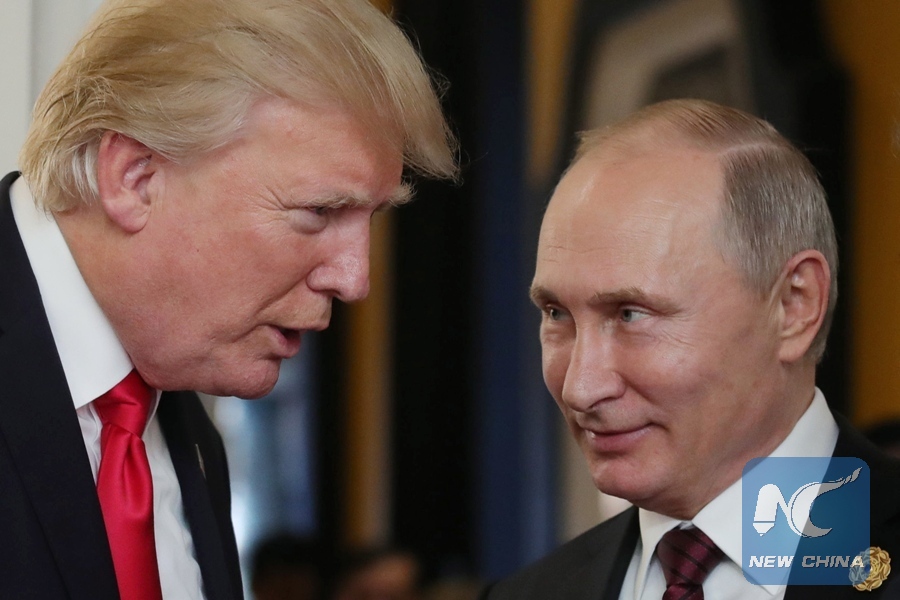
File photo taken on Nov. 11, 2017 shows U.S. President Donald Trump (L) speaking with Russian President Vladimir Putin as they attend the APEC Economic Leaders' Meeting in Danang, Vitenam. (Xinhua/AFP)

WASHINGTON, Jan. 31 (Xinhua) -- The U.S. Treasury Department on Monday published a long-awaited list of Russian officials and business leaders eligible for sanctions for alleged meddling in the U.S. presidential elections.

Experts, however, have questioned the list, saying its content and coverage has threatened its credibility and operability.

The list, aiming at pressuring the Kremlin to cut off its behavior in Ukraine and Crimea, included 114 senior Russian officials and 96 oligarchs, each of whom has an estimated net worth of 1 trillion U.S. dollars.

It came after U.S. President Donald Trump signed a legislation in August last year that requires the Treasury Department to provide a list of names of Russian officials and wealthy oligarchs that have intimate relations with the Kremlin and a sizeable amount of personal wealth.

Russia has responded strongly as President Vladimir Putin said later that the list is an unfriendly gesture and would undermine the nation's relations with the United States in the long run.

The Forbes confirmed on its website that the billionaires list "is copied" from the media outlet's 2017 list of the World's Billionaires.

"The Treasury Department's list is an exact replica of the Russians on the 2017 billionaires list," it noted. "In an emailed statement to Forbes, a Treasury spokesperson explained that the unclassified report was derived from open sources, including Forbes and others."

Media organizations also pointed out the stunning similarity between the Russian officials list and the officials name list on the English website of the Russian federation government.

The report looks just like a Kremlin phone book copied and pasted by U.S. secret services, said Konstantin Kosachyov, chairman of the State Duma international affairs committee.

"In it, one finds the chiefs of all Russian leadership bodies in alphabetical order," Kosachyov said on his Facebook page.

Former U.S. Ambassador to Russia Michael McFaul described the list as meaningless and sloppy.

"What classified 'intel' was used to compose this list? I see no evidence of that at all," he tweeted, lashing out at the "ridiculously broad and thus meaningless" list.

"Listing whole GOR is a joke," he added.

Dmitri Trenin, Carnegie Moscow Center's director, said on twitter that "the power of U.S. sanctions is not in the specifics of people or companies blacklisted but in a simple message: those who want to do deals with Russians might have to deal with the United States. The recent Kremlin list underlines that message."

"Russians are not to be deterred by U.S. sanctions. They are designed to deter non-Russians from dealing with Russia," he added.

Despite the U.S. statement on Tuesday that Washington has persuaded multiple nations not to do business with Russia to avoid being sanctioned by the United States, Trenin argued that "U.S. blacklists like U.S. sanctions work to make most Russians - elites as well as the public - feel that they are together in this standoff with the United States."

Back to Top Close
Xinhuanet

Analysis: U.S. Treasury's "Kremlin list" mocked as sloppy, meaningless

Source: Xinhua 2018-02-01 23:24:39

File photo taken on Nov. 11, 2017 shows U.S. President Donald Trump (L) speaking with Russian President Vladimir Putin as they attend the APEC Economic Leaders' Meeting in Danang, Vitenam. (Xinhua/AFP)

WASHINGTON, Jan. 31 (Xinhua) -- The U.S. Treasury Department on Monday published a long-awaited list of Russian officials and business leaders eligible for sanctions for alleged meddling in the U.S. presidential elections.

Experts, however, have questioned the list, saying its content and coverage has threatened its credibility and operability.

The list, aiming at pressuring the Kremlin to cut off its behavior in Ukraine and Crimea, included 114 senior Russian officials and 96 oligarchs, each of whom has an estimated net worth of 1 trillion U.S. dollars.

It came after U.S. President Donald Trump signed a legislation in August last year that requires the Treasury Department to provide a list of names of Russian officials and wealthy oligarchs that have intimate relations with the Kremlin and a sizeable amount of personal wealth.

Russia has responded strongly as President Vladimir Putin said later that the list is an unfriendly gesture and would undermine the nation's relations with the United States in the long run.

The Forbes confirmed on its website that the billionaires list "is copied" from the media outlet's 2017 list of the World's Billionaires.

"The Treasury Department's list is an exact replica of the Russians on the 2017 billionaires list," it noted. "In an emailed statement to Forbes, a Treasury spokesperson explained that the unclassified report was derived from open sources, including Forbes and others."

Media organizations also pointed out the stunning similarity between the Russian officials list and the officials name list on the English website of the Russian federation government.

The report looks just like a Kremlin phone book copied and pasted by U.S. secret services, said Konstantin Kosachyov, chairman of the State Duma international affairs committee.

"In it, one finds the chiefs of all Russian leadership bodies in alphabetical order," Kosachyov said on his Facebook page.

Former U.S. Ambassador to Russia Michael McFaul described the list as meaningless and sloppy.

"What classified 'intel' was used to compose this list? I see no evidence of that at all," he tweeted, lashing out at the "ridiculously broad and thus meaningless" list.

"Listing whole GOR is a joke," he added.

Dmitri Trenin, Carnegie Moscow Center's director, said on twitter that "the power of U.S. sanctions is not in the specifics of people or companies blacklisted but in a simple message: those who want to do deals with Russians might have to deal with the United States. The recent Kremlin list underlines that message."

"Russians are not to be deterred by U.S. sanctions. They are designed to deter non-Russians from dealing with Russia," he added.

Despite the U.S. statement on Tuesday that Washington has persuaded multiple nations not to do business with Russia to avoid being sanctioned by the United States, Trenin argued that "U.S. blacklists like U.S. sanctions work to make most Russians - elites as well as the public - feel that they are together in this standoff with the United States."

010020070750000000000000011105521369428051