BEIJING, Jan. 24 (Xinhua) -- China's growing skilled population will help offset the impacts of an aging society and shrinking workforce, according to some experts.
Official data showed that the total number of births fell by about 630,000 year on year in 2017 while percentage of the population aged over 60 rose from 16.7 percent in 2016 to 17.3 percent in 2017, raising concerns of a shrinking workforce and an ensuing economic slowdown in the future.
To address the shrinking population, in 2016, China changed its family planning policy to allow all families to have two children.
About 17.23 million babies were born in 2017, of which 51 percent have an older sibling, indicating that the second-child policy is taking effect, according to the National Health and Family Planning Commission.
China's population dividend, the accelerated economic growth that results from a decline in birth and death rates, is waning but still rather abundant, and the government can limit the workforce decline and enhance its quality through increased investment in education and medical infrastructure to shore up the country's competitive edge, according to Mao Shengyong, spokesperson for the National Bureau of Statistics.
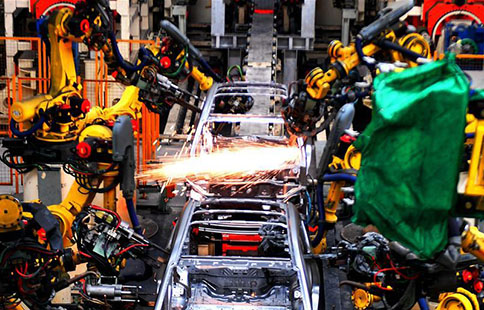
Led by robotics and artificial intelligence, the new industrial revolution is making economic growth less reliant on the workforce size, according to Xu Zhaoyuan, a senior researcher at the State Council's Development Research Center.
The quality of the workforce matters more than its size and China should improve education, training and innovation investment to renew its industrial competitiveness, Xu added.
The country sees nearly 3 million science and engineering graduates annually, five times more than the United States, said Sergio P. Ermotti, CEO of UBS, a Swiss global financial services company.
"I think one thing not well appreciated about China's demographics is that while the population is aging, the new workforce is much better educated, which will provide what we might term an 'engineer dividend' for the next decade," Ermotti said.