中文字幕网伦射乱中文-超清中文乱码字幕在线观看-亚洲v国产v欧美v久久久久久-久久性网-手机在线成人av-成人六区-国产人与zoxxxx另类一一-青青草国产久久精品-蜜桃av久久久一区二区三区麻豆-成人av一区二区免费播放-在线视频麻豆-www爱爱-成人免费看片视频-性欧美老肥妇喷水-五月99久久婷婷国产综合亚洲-亚洲最色-各种含道具高h调教1v1男男-91丨porny丨国产-国产精品无码专区在线观看不卡-大香伊人

 
American scientists develop quick, reliable way to test HIV
                 Source: Xinhua | 2018-01-23 04:49:30 | Editor: huaxia

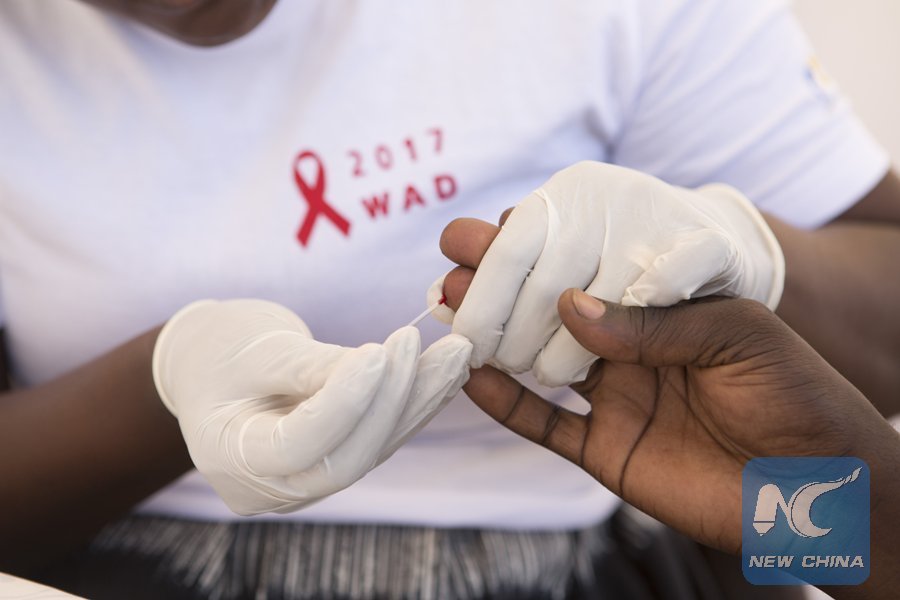
A person receives a free HIV test during the World AIDS Day activities in Kigali, Rwanda, on Dec. 1, 2017. (Xinhua/Gabriel Dusabe)

WASHINGTON, Jan. 22 (Xinhua) -- A new testing method for HIV developed by Stanford chemists combines the convenience of saliva test and the reliability of blood tests, a study showed on Monday.

By far the most common way to test for HIV infection is to look for antibodies in a blood sample. That test is far more convenient than a direct search for the virus, in part because antibodies are relatively abundant in the bloodstream after the early stages of infection. Its drawback is that few people will volunteer for blood testing.

But oral fluid tests have their own problems. While there are HIV antibodies in saliva, they just aren't that many present, especially early on.

By the time oral fluid tests can reliably detect HIV, Carolyn Bertozzi, a member of Stanford Bio-X who led the study, said, "You have waited a long time" - and in that time, the infection could spread.

Bertozzi's team wanted to figure out how to make it easier to detect the small amount of antibodies present in the saliva of someone with HIV.

The novel method, reported on the Proceedings of the National Academy of Sciences, takes advantage of a key feature of antibodies, whose two arms easily latches onto a virus like HIV.

Scientists take bits of HIV and attached them to one or the other half of a piece of DNA. They then added the modified HIV bits into the saliva sample of people who are screened for HIV.

If the sample contained HIV antibodies, their two arms would grab hold of the tagged HIV, bringing the two halves of the DNA together into a continuous strand. Once the DNA piece is made whole, it is easy to detect using standard lab techniques.

That can all be done without requiring a blood sample or much technology to process the samples that are taken. "It's purposefully low tech," Bertozzi said.

"Our hope is that we can get an earlier read than the present oral test because the sensitivity is better," Bertozzi said.

Bertozzi also said the same principles may be useful for allergy testing and screening for typhoid and tuberculosis infection.

Back to Top Close
Xinhuanet

American scientists develop quick, reliable way to test HIV

Source: Xinhua 2018-01-23 04:49:30

A person receives a free HIV test during the World AIDS Day activities in Kigali, Rwanda, on Dec. 1, 2017. (Xinhua/Gabriel Dusabe)

WASHINGTON, Jan. 22 (Xinhua) -- A new testing method for HIV developed by Stanford chemists combines the convenience of saliva test and the reliability of blood tests, a study showed on Monday.

By far the most common way to test for HIV infection is to look for antibodies in a blood sample. That test is far more convenient than a direct search for the virus, in part because antibodies are relatively abundant in the bloodstream after the early stages of infection. Its drawback is that few people will volunteer for blood testing.

But oral fluid tests have their own problems. While there are HIV antibodies in saliva, they just aren't that many present, especially early on.

By the time oral fluid tests can reliably detect HIV, Carolyn Bertozzi, a member of Stanford Bio-X who led the study, said, "You have waited a long time" - and in that time, the infection could spread.

Bertozzi's team wanted to figure out how to make it easier to detect the small amount of antibodies present in the saliva of someone with HIV.

The novel method, reported on the Proceedings of the National Academy of Sciences, takes advantage of a key feature of antibodies, whose two arms easily latches onto a virus like HIV.

Scientists take bits of HIV and attached them to one or the other half of a piece of DNA. They then added the modified HIV bits into the saliva sample of people who are screened for HIV.

If the sample contained HIV antibodies, their two arms would grab hold of the tagged HIV, bringing the two halves of the DNA together into a continuous strand. Once the DNA piece is made whole, it is easy to detect using standard lab techniques.

That can all be done without requiring a blood sample or much technology to process the samples that are taken. "It's purposefully low tech," Bertozzi said.

"Our hope is that we can get an earlier read than the present oral test because the sensitivity is better," Bertozzi said.

Bertozzi also said the same principles may be useful for allergy testing and screening for typhoid and tuberculosis infection.

010020070750000000000000011105091369161641