中文字幕网伦射乱中文-超清中文乱码字幕在线观看-亚洲v国产v欧美v久久久久久-久久性网-手机在线成人av-成人六区-国产人与zoxxxx另类一一-青青草国产久久精品-蜜桃av久久久一区二区三区麻豆-成人av一区二区免费播放-在线视频麻豆-www爱爱-成人免费看片视频-性欧美老肥妇喷水-五月99久久婷婷国产综合亚洲-亚洲最色-各种含道具高h调教1v1男男-91丨porny丨国产-国产精品无码专区在线观看不卡-大香伊人

 
U.S. spy satellite appears lost after SpaceX launch
                 Source: Xinhua | 2018-01-10 00:45:16 | Editor: huaxia

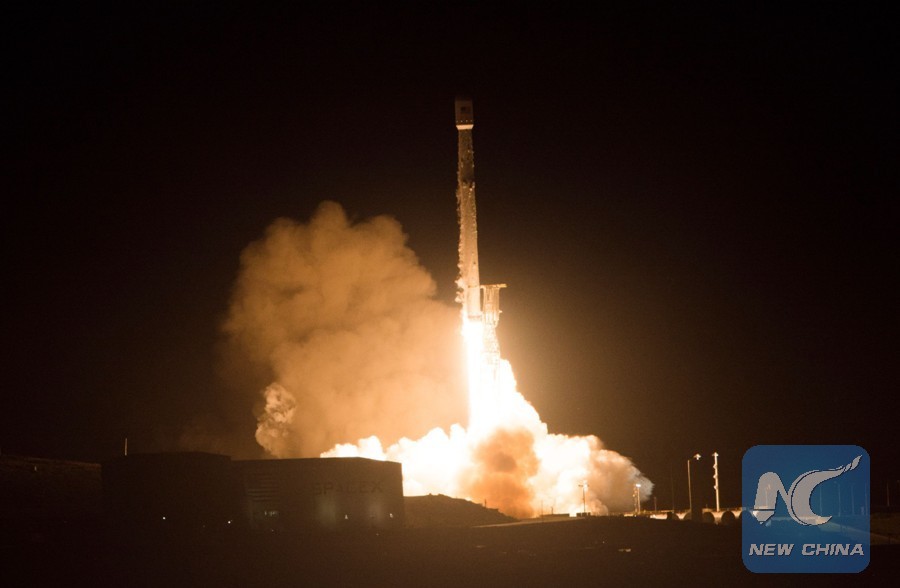
File Photo: The SpaceX Falcon 9 rocket launches from the Space Launch Complex 4 at Vandenberg Air Force Base in Lompoc, California on December 22, 2017. (AFP Photo)

WASHINGTON, Jan. 9 (Xinhua) -- A highly classified U.S. spy satellite that was launched aboard a SpaceX rocket on Sunday reportedly failed to reach orbit and might have been lost, a SpaceX spokesperson said.

But SpaceX hinted that the presumed problem may have nothing to do with its rocket, the spokesperson in an emailed statement to Xinhua on Monday.

"We do not comment on missions of this nature; but as of right now reviews of the data indicate Falcon 9 performed nominally," the statement added.

Then, in an updated statement on Tuesday morning, SpaceX President Gwynne Shotwell reaffirmed that its Falcon 9 rocket "did everything correctly" during the launch from the Cape Canaveral Air Force Station in Florida.

"If we or others find otherwise based on further review, we will report it immediately. Information published that is contrary to this statement is categorically false," Shotwell said.

"Due to the classified nature of the payload, no further comment is possible," she said.

The mysterious Zuma satellite, built by American aerospace and defense technology company Northrop Grumman, failed to separate from the second stage of the Falcon 9 rocket and is assumed to have broken up or plunged into the sea, according to news website Time, which quoted two anonymous U.S. officials as saying.

The satellite is assumed to be "a write-off," the report said, adding that an investigation is under way, but there is no initial indication of sabotage or other interference.

However, Jonathan McDowell, an astronomer at the Harvard-Smithsonian Center for Astrophysics, tweeted that data from Space-Track, a website managed by the U.S. Strategic Command, indicated that Zuma "completed at least one orbit," which conflicted with media stories that payload failed to separate from the second stage.

He noted that it was "still possible that payload did not power up at separation, would account for at least part of [the] rumours of a failure."

"Normally when you buy a rocket launch, you've paid for 'the payload adapter on the rocket final stage pops the satellite off at the end,'" McDowell said, "but on this mission the customer provided its own payload adapter, so separation may be its problem and not SpaceX's problem."

The expert also refuted claims that the loss of Zuma is "a front, a cover to hide a successful insertion in a secret orbit or some other scam."

"This is JUST NOT PLAUSIBLE for many reasons. I am confident other experts on the subject will agree with me," he added.

Previously, SpaceX has launched two classified payloads for the U.S. government during the past year.

Launched in May, the NROL-76 spy satellite was for the National Reconnaissance Office. The other was a non-crewed X-37B space plane for the U.S. Air Force, which lifted off in September.

Shotwell said SpaceX anticipates no impact on the upcoming launch schedule.

"Falcon Heavy has been rolled out to launchpad LC-39A for a static fire later this week, to be followed shortly thereafter by its maiden flight," she said, adding that "We are also preparing for an [Falcon 9] launch for (Luxembourg-based) SES and the Luxembourg Government ... in three weeks."

Back to Top Close
Xinhuanet

U.S. spy satellite appears lost after SpaceX launch

Source: Xinhua 2018-01-10 00:45:16

File Photo: The SpaceX Falcon 9 rocket launches from the Space Launch Complex 4 at Vandenberg Air Force Base in Lompoc, California on December 22, 2017. (AFP Photo)

WASHINGTON, Jan. 9 (Xinhua) -- A highly classified U.S. spy satellite that was launched aboard a SpaceX rocket on Sunday reportedly failed to reach orbit and might have been lost, a SpaceX spokesperson said.

But SpaceX hinted that the presumed problem may have nothing to do with its rocket, the spokesperson in an emailed statement to Xinhua on Monday.

"We do not comment on missions of this nature; but as of right now reviews of the data indicate Falcon 9 performed nominally," the statement added.

Then, in an updated statement on Tuesday morning, SpaceX President Gwynne Shotwell reaffirmed that its Falcon 9 rocket "did everything correctly" during the launch from the Cape Canaveral Air Force Station in Florida.

"If we or others find otherwise based on further review, we will report it immediately. Information published that is contrary to this statement is categorically false," Shotwell said.

"Due to the classified nature of the payload, no further comment is possible," she said.

The mysterious Zuma satellite, built by American aerospace and defense technology company Northrop Grumman, failed to separate from the second stage of the Falcon 9 rocket and is assumed to have broken up or plunged into the sea, according to news website Time, which quoted two anonymous U.S. officials as saying.

The satellite is assumed to be "a write-off," the report said, adding that an investigation is under way, but there is no initial indication of sabotage or other interference.

However, Jonathan McDowell, an astronomer at the Harvard-Smithsonian Center for Astrophysics, tweeted that data from Space-Track, a website managed by the U.S. Strategic Command, indicated that Zuma "completed at least one orbit," which conflicted with media stories that payload failed to separate from the second stage.

He noted that it was "still possible that payload did not power up at separation, would account for at least part of [the] rumours of a failure."

"Normally when you buy a rocket launch, you've paid for 'the payload adapter on the rocket final stage pops the satellite off at the end,'" McDowell said, "but on this mission the customer provided its own payload adapter, so separation may be its problem and not SpaceX's problem."

The expert also refuted claims that the loss of Zuma is "a front, a cover to hide a successful insertion in a secret orbit or some other scam."

"This is JUST NOT PLAUSIBLE for many reasons. I am confident other experts on the subject will agree with me," he added.

Previously, SpaceX has launched two classified payloads for the U.S. government during the past year.

Launched in May, the NROL-76 spy satellite was for the National Reconnaissance Office. The other was a non-crewed X-37B space plane for the U.S. Air Force, which lifted off in September.

Shotwell said SpaceX anticipates no impact on the upcoming launch schedule.

"Falcon Heavy has been rolled out to launchpad LC-39A for a static fire later this week, to be followed shortly thereafter by its maiden flight," she said, adding that "We are also preparing for an [Falcon 9] launch for (Luxembourg-based) SES and the Luxembourg Government ... in three weeks."

010020070750000000000000011105091368833631