中文字幕网伦射乱中文-超清中文乱码字幕在线观看-亚洲v国产v欧美v久久久久久-久久性网-手机在线成人av-成人六区-国产人与zoxxxx另类一一-青青草国产久久精品-蜜桃av久久久一区二区三区麻豆-成人av一区二区免费播放-在线视频麻豆-www爱爱-成人免费看片视频-性欧美老肥妇喷水-五月99久久婷婷国产综合亚洲-亚洲最色-各种含道具高h调教1v1男男-91丨porny丨国产-国产精品无码专区在线观看不卡-大香伊人

 
Some 386,000 babies born worldwide on New Year's Day, says UNICEF
                 Source: Xinhua | 2018-01-02 23:08:45 | Editor: huaxia

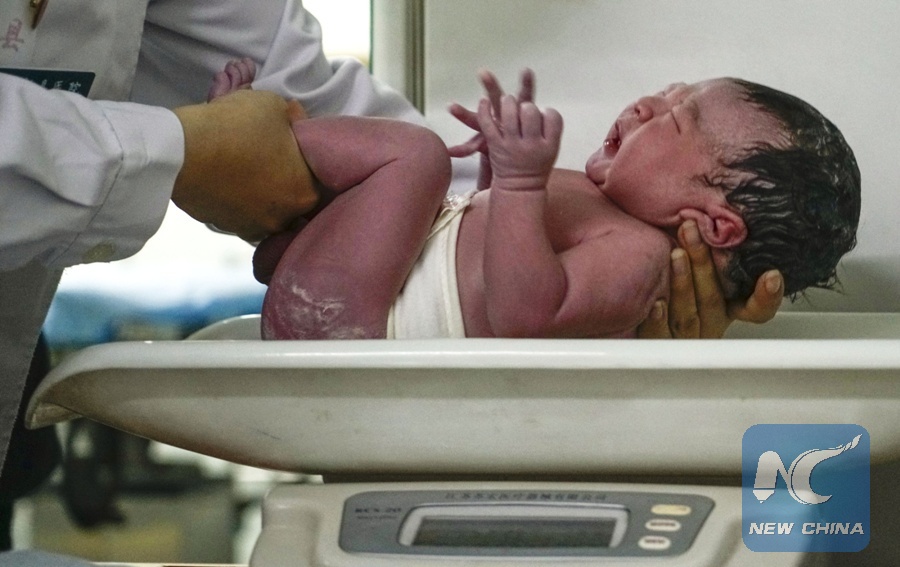
File Photo: A new born baby is weighed at the Anxin county hospital in Xiongan New Area, north China's Hebei Province, Oct. 1, 2017. (Xinhua/Xing Guangli)

UNITED NATIONS, Jan. 2 (Xinhua) -- The United Nations Children's Fund (UNICEF) estimated Monday that nearly 386,000 babies were born on New Year's Day, over 90 percent in less developed regions.

The agency reported that globally, over half of these births were estimated to have taken place in nine countries: India (69,070), China (44,760), Nigeria (20,210), Pakistan (14,910), Indonesia(13,370), the United States (11,280), the Democratic Republic of the Congo (9,400), Ethiopia (9,020) and Bangladesh (8,370).

Among those children, some will unfortunately not make it past their first day. In 2016, an estimated 2,600 children died within the first 24 hours every day of the year. UNICEF said that for almost 2 million newborns, their first week was also their last.

In all, 2.6 million children died before the end of their first month. Among them, more than 80 percent died from preventable and treatable causes such as premature birth, complications during delivery, and infections like sepsis and pneumonia.

Over the past two decades, the world has seen unprecedented progress in child survival, halving the number of children worldwide who die before their fifth birthday to 5.6 million in 2016. But despite these advances, there has been slower progress for newborns. Babies dying in the first month account for 46 percent of all deaths among children under five.

Next month, UNICEF will launch "Every Child Alive," a global campaign to demand and deliver affordable, quality health care solutions for every mother and newborn.

These solutions include a steady supply of clean water and electricity at health facilities, the presence of a skilled health attendant during birth, disinfecting the umbilical cord, breastfeeding within the first hour after birth, and skin-to-skin contact between the mother and child.

Back to Top Close
Xinhuanet

Some 386,000 babies born worldwide on New Year's Day, says UNICEF

Source: Xinhua 2018-01-02 23:08:45

File Photo: A new born baby is weighed at the Anxin county hospital in Xiongan New Area, north China's Hebei Province, Oct. 1, 2017. (Xinhua/Xing Guangli)

UNITED NATIONS, Jan. 2 (Xinhua) -- The United Nations Children's Fund (UNICEF) estimated Monday that nearly 386,000 babies were born on New Year's Day, over 90 percent in less developed regions.

The agency reported that globally, over half of these births were estimated to have taken place in nine countries: India (69,070), China (44,760), Nigeria (20,210), Pakistan (14,910), Indonesia(13,370), the United States (11,280), the Democratic Republic of the Congo (9,400), Ethiopia (9,020) and Bangladesh (8,370).

Among those children, some will unfortunately not make it past their first day. In 2016, an estimated 2,600 children died within the first 24 hours every day of the year. UNICEF said that for almost 2 million newborns, their first week was also their last.

In all, 2.6 million children died before the end of their first month. Among them, more than 80 percent died from preventable and treatable causes such as premature birth, complications during delivery, and infections like sepsis and pneumonia.

Over the past two decades, the world has seen unprecedented progress in child survival, halving the number of children worldwide who die before their fifth birthday to 5.6 million in 2016. But despite these advances, there has been slower progress for newborns. Babies dying in the first month account for 46 percent of all deaths among children under five.

Next month, UNICEF will launch "Every Child Alive," a global campaign to demand and deliver affordable, quality health care solutions for every mother and newborn.

These solutions include a steady supply of clean water and electricity at health facilities, the presence of a skilled health attendant during birth, disinfecting the umbilical cord, breastfeeding within the first hour after birth, and skin-to-skin contact between the mother and child.

010020070750000000000000011105521368676011